Islamic State From a Worldwide Perspective

In recent years fresh terror has arisen in the Middle East, as one of the most brutal organisations on the planet occupies vast areas in both Iraq and Syria. During 2014, recordings showing the decapitations of western journalists and reports highlighting the brutal treatment of local enemies began to stir tensions in the west. Now, as a great chunk of northern Syria and Iraq has fallen under the leadership of Abu Bakr al-Baghdadi, leader of the organisation, such tensions are higher than ever.

Islamic State (IS), also known as Islamic State of Iraq and Syria, Islamic State of Iraq and al-Sham, (ISIS), Islamic State of Iraq and the Levant (ISIL) or Islamic Caliphate, formed in 1999, and shares its roots with the infamous al-Qaeda. Since then, the organisation has committed many despicable acts, both to locals and to foreigners. The decapitation of western journalists is one example, along with the fact that, according to the Moscow Times, the group has openly declared war on the United States and, in a video depicting a member sat in a military aircraft, threatened Russian president Vladimir Putin. The United States and Russia have had a bitter relationship for over half a century, and even after the end of the Cold War diplomatic relations are precarious, especially with the current crisis in the Ukraine. Islamic State, however, has taken the side of neither: they’ve even gone as far as to threaten both.

What does this say about the organisation’s politics? Well, we can determine one thing: the fact that they’ll always take their own side highlights both the incompatibility of their ideology with the political systems of the world’s powers, and for that matter, the rest of the world. No national military will fight alongside their armies, and yet Islamic State continues to commit despicable acts independent of any other regime.

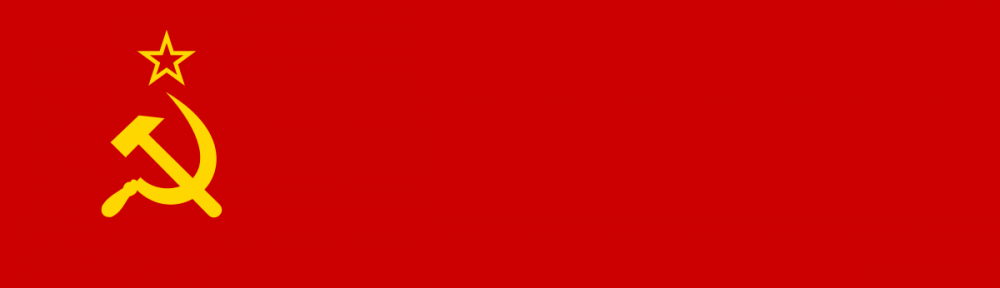
The haunting flag of this 'rouge terror'

The haunting flag of this ‘rouge terror’

Because of the inhumane brutality employed by the organisation, their lack of any real justification for their actions, and their continuing hostility towards the rest of the world, this is an issue on which I feel the different powers of the world must put aside their differences to combat. Left and right, east or west, all states can share a common viewpoint on the organisation, and thus should all work to secure the safety of innocent civilians in Iraq, Syria, and the bordering states, alongside that of whoever Islamic State may threaten in their own countries.

I’ve made my point clear, but I’ll conclude the entry by addressing the leftists specifically: I feel that it’s essential to understand Islamic State in order to develop a rational answer as to how one should approach the issue, and so it must be made clear that the organisation is certainly not a socialist one, nor one fighting merely for justice or populism. This would seem obvious, but I imagine it would be easy for one to fall into the trap of believing that I.S. militants, existing in an area with a history of atrocities committed by multiple powers in the world (take the recent war in Iraq, or the Soviet invasion of Afghanistan for examples), and one which exists within borders drawn up by the western world, are actually combatting imperialism.

It is definitely true that the area is subject to ongoing foreign mistreatment, including acts that could be considered disgraceful, and the fact remains that Islamic State exists as a militant organisation which opposes those who have treated the citizens of the region in such a way. This alone, however, does not mean that they fight to prevent these acts from being committed. It is essential to remember that amongst the beheadings of journalists, they have terrorised the local population in a similar way. To give an example, the BBC News’s website states that an activist claims they have abducted up to 285 Christians who were seized in the Hassakeh province in Syria, with reports initially placing the number at 90. The website also states that ‘some local 1,000 Assyrian families are believed to have fled their homes in the wake of the abductions.’  Even if other religions are taken out of the picture, their own religion and thus their central ideology (surely a community among which they would find solidarity) condemns Islamic State, showing that they have no true ideological ground to occupy, and certainly no justification for their actions.

This is the reason why this debate is not a political one; there is only a moral and an immoral side. It is an issue in which all sensible individuals, no matter where they stand on the majority of political issues, should chose the moral decision. Thus, discussing the question of Islamic State militarism, communists should come to the same conclusion as their capitalist opponents. It by no means requires an alliance with or respect for the capitalist world, rather the simple recogniton that this is an issue which everyone, from both political extremes, should be able to agree on. Military intervention, on behalf of all those Islamic State threatens, should seem the obvious conclusion.
Mao, Xi, and the Worst of Both Worlds

Thursday marked the Chinese New Year, and the beginning of the year 4713, making this an appropriate time to reflect on history and tradition, and a suitable(ish) time to talk about something that’s been on my mind for a while; the politics and the economy of modern China.

The country, being the world’s most heavily populated, is home to one of the largest armies, an ever-expanding economy, and a haven of science and technology. Nowerdays, it’s even become fashionable to argue that China will soon overtake the United States in terms of power and world influence. Yet there is another side to the country, this being the political philosophy that drives its leaders: communism.

So, if it’s actually the case that China is not only experiencing great economic and military prosperity but has managed to achieve such through the means of a communist economy, is China not a perfect example of a utopian socialist society?

If you’ve been reading my comments on China in previous entries, you’ll know that the answer is, in my opinion, no. Finally, I have the oppertunity to explain why…

To start with, let’s look to the Chinese revolution, an act that would transform the country and the world, changing the shape of East Asia dramatically. The second independent communist state followed a similar path to Russia, its northerly neighbour: First the monarchy was overthrown by popular revolt (the Boxer Rebellion, or, in Russia’s case, the February Revolution), then the bourgeois by communist takeover (the Revolution of 1949, or the October Revolution) all with the help of an invasion from another imperialist country (Japan, or Germany) in the midst of an international war (World War Two, or World War One). Soon after, strict economic policies (the Great Leap Forward, or the Five Year Plans) were to be introduced, which would transform the economically-backward peasant nations into giant industrial powers, at the cost of millions of lives. After the result was achieved and the chaos healed, relaxations in the policy followed, (the thaw under Deng Xiaoping or Nikita Khrushchev), and the two nations progressed respectively from then onwards. One major difference exists between Sino and Soviet communism, however: the latter collapsed whilst the former did not.

As I stated in my last entry, the period of thaw under Khrushchev gradually saw the withering away of the socialist state, setting the Soviet Union on a one-way road to its eventual dissolution. Strict economic regulations appeared to thaw after Mao’s death, too, yet these reforms didn’t lead the state to its downfall, only to the adoption of very relaxed, market-orientated policies, allowing China to succumb to what can only be described as ‘sort-of socialism’. In other words, unlike the USSR, which collapsed honestly, openly rejecting the philosophy it was founded upon, communist China retained its superficial character whilst the regime suffered internal destruction. To understand what this actually means for the Chinese people, we must examine conditions in China today, sixty-six years after the People’s Republic of China was declared, under the leadership of Xi Jinping…

The initial problem ‘sort-of socialism’ presents in the case of China is the fact that the socialist state is really nothing but an emerging capitalist one. Today, China is home to HSBC, Sinopec Limited, and many other brands, corporations and features we would regard as a central or vital aspect of the capitalist world. Whilst ‘Made in China’ may remain printed on the majority of everyday accessories, ‘Designed in China’ is becoming an equally suitable one. It’s evident that, from what Xiaoping referred to as ‘Socialism with Chinese Characteristics’, corporate empires have emerged, and thus the Chinese bourgeois, a class to whose elimination Mao dedicated his life, have been reborn.

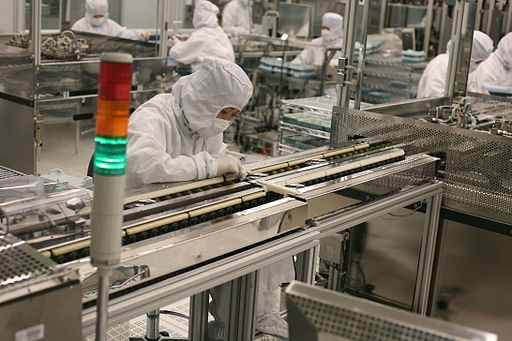
It’s not only the owners of production, however, that profit from the situation, for China has a severe problem in deciding who, as a nation, it works for – the liberal, capitalist west may frown upon their record of human rights abuses, yet it’s this region of the world which exploits the labourers of nations such as Bangladesh, Indonesia, and, unfortunately, China too; many workers produce iPads, iPhones, and iPods for little wages and long hours, under a government claiming the moral stance when it comes to justice for the proletariat, and a merciless stance when it comes to capitalist exploitation. In the country whose underdogs fought a bloody war to have their voices heard in the name of communism, children toil in factories which have begun the process of installing giant nets outside the buildings to prevent successful suicide attempts, and in which workers are paid $1.50 per hour.

The Clean Room of the Seagate Factory, Wuxi, China

Astonishingly, the aspect of the Chinese society which still exists according to socialist principles, the communist leadership, simply allows both atrocities to occur. The Chinese Communist Party is perfectly capable of writing these wrongs; if he chose to, I’m completely confident that Xi Jingping could rid his nation of the such oppression, and ensure that no factory worker was ever subject to the demands of international ones again. If they were truly devoted to the cause, I don’t doubt that the party could even ensure a consistent, sufficient income for even the hardest-hit labourers.

Perhaps the thorough transformation of the Chinese economy akin to that of the Great Leap Forward would not be possible, or not without another several million deaths for the authors of the Black Book of Communism, and all their sympathetic readers to wave in the face of Karl Marx and all his. After all, modern-day China has evolved this way, and their system of governance has moulded as a capitalist one, and therefore I’d argue that communism could no longer be reached without proletarian revolution. However, if the CCP wished to eliminate child labour of any sorts, or to ensure justice for the workers who toil in the factories producing products to be sold globally, I’m confident that this would happen. Businesses would lose out in this scenario; China’s economy may shrink; the western corporations (whom the Communist Party undoubtedly claim to despise in the first place) would lose a chunk of their colonial overseas supply of workers, yet China could try and occupy a marginally-better position on the international scale of morality.

We must keep in mind remember that Mao Tse-Tung, or Chairman Mao fought long and civil war, introducing ruthless policies to combat counter-revolutionaries, and revolutionised the Chinese economy for a reason. I do not necessarily support such actions, and nor do I defending them, but if Mao was alive today, I’d be intrigued to see what he thought of modern-day PRC. Would he tolerate the exploitation currently in existence? Frankly, I can’t imagine him doing so. I’d like to that that if nothing else, under Mao, the achievement of a proletarian dictatorship would have been wholeheartedly attempted.

Mao Tse-Tung Portrait

Yet, as many critisize Mao as authoritarian, it’s important not to be deceived by the idea of a thawing China, for whilst Mao’s legacy may have come to an end, authoritarianism, or perhaps even totalitarianism, has certainly not. The period of thaw consisted of an ever-expanding economy’s construction, or, in other words, the destruction of the socialist one Mao tried to achieve during the Great Leap Forward, yet politically, China remains a highly-censored and autocratic state. You only have to take a look at the persecution of those who practice Falun-Gong (a form of yoga) – something that would appear entirely unrelated to communism, capitalism, or any issue which may concern the CPC -, to be sure of the degree to which the Chinese people are tyrannised.

This is the reason as to why I believe the People’s Republic of China is an embarrassment to socialism: it appears that the climate has been altered in one major way since Mao’s leadership. That is to say that on the issue of achieving a true, communist society, the state appears to have given up trying, leaving a country in which only the red flag, the party logo, and the second ‘C’ in the party’s name indicate a socialist society. Despite this, however, it is clear that the autocratic bureaucracy has not shifted with the economic climate, leaving nothing more than an authoritarian and tyrannical state which, whilst claiming a party name so untrue it would almost appear sarcastic, governs a country under the shackles of the new bourgeois, leaving China with the worst of both worlds. Top put this into context, In Russia, ‘Dictatorship of the Proletariat’ soon gave way to regular dictatorship. In China, on the other hand, the former has managed to transform itself into ‘Dictatorship of the Bureaucrats and Those who Happened to Benefit From Various Relaxations of Economic Policies, Partially Responsible (Alongside Foreign Exploitation Which the State Appears to Condone) for the Exploitation of the Chinese Workers.

So there you have it. ‘Sort-of socialism’ is simply capitalism under the existance of an autocratic regime. No matter how hard they try, the Chinese Communist Party cannot justify their actions, or not, at least, in the name of communism. China’s political history, from Mao Tse-Tung to Xi Jinping is a history of injustice, tyranny and, despite the great industrial and technological advancements the country has made, failure.

The photograph depicting factory labourers was provided by Robert Scoble from Wikimedia Commons. Below is a link for the photograph (first) and its licence (second):

http://creativecommons.org/licenses/by/2.0/deed.en

If it Wasn’t for Yeltsin…

Today, (Friday 13th February) according to HISTORYNET (http://www.historynet.com/today-in-history) was the day that Konstantin Chernenko, the second-to-last Soviet leader was selected as the successor of Yuri Andropov, as the Communist Party of the Soviet Union’s General Secretary, in the year of 1984. To mark the thirty-first anniversary of this date, I thought that rather than focussing on a particular news story I’d write about the past, specifically the last days of the USSR, making it an appropriate time to address an interesting question: what would have become of the USSR if it wasn’t for its 1991 dissolution?

Even after the events of Christmas Day 1991, communism, in the minds of many, hasn’t seemed to have departed. The current president is a former KGB agent, who referred to the Soviet Union’s collapse as “the greatest geopolitical catastrophe” of the century. Almost every city has a street named after Lenin, and whilst comparably insignificant to the former Communist Party of the Soviet Union, the Communist Party of the Russian Federation remains strong and active.

In my opinion, the period of thaw under Khrushchev, whilst marking the height of the Cold War, paved the way for the collapse of communism. I’d see this as a result of (I’ll apologise in advance for any Stalinists) Stalin’s reign, which brought famine, terror and repression of a scale incomparable to that under Lenin, the Provisional Government, or tsarism. And given that this is Russia we’re talking about, a country with a long and bitter history of autocratic rule, it definitely says something. Whilst the dismantling of Stalinism did not directly result in what is recognised as the ‘Fall of Communism’ (which, given what Stalinism actually implemented, was likely for the better) I believe it left behind a regime which was naturally inclined to thaw after Stalin’s departure, eventually leading to its collapse.

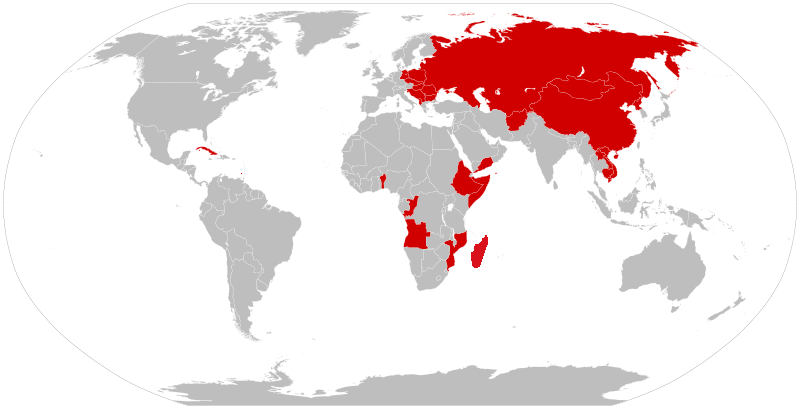
Additionally, I believe communism is not only dead for the present; it’s remained dead for a significant period of time. The fall of the Soviet Union shortly led to a return of capitalism in its constituent states, proving that communism only survived in the area through the Communist Party of the Soviet Union, and thus did so as an idea rather than an actuality. Even Yugoslavia, a country independent (both nationally and politically) of the USSR, fragmented shortly after its dissolution, leaving behind only a select handful of communist countries scattered around the globe.

The coloured states constituted what was recognised as the communist world at its height. Today, only a fraction of red states remain

The coloured states constituted what was recognised as the communist world at its height. Today, only a fraction of red states remain

But what if such hadn’t occurred? What if Gorbachev proved to be unsuccessful in the Soviet Union’s dissolution, say, if the 1991 coup d’état managed to achieve socialism’s preservation? Would there still be an Eastern Bloc, an Iron Curtain, and firm alliances binding the first and second world into militarist organisations? During the extra twenty-four years, would the communist world not have declined but expanded?
To give an answer rather less-dramatic than the question suggests it should be, I think not.

The way I see it, as I’ve already said, the Soviet Union had not seen socialism for a long while. The population may have caught a glimpse, in 1917, of where it may lie, but the efforts to reach it soon translated into bureaucracy, later totalitarianism. This resulted only in an illusion of socialism. In other words, if it weren’t for Boris Yeltsin’s government, I believe that any further efforts made by the Communist Party would be simply buying time. By the 1990’s, the once-so-tightly-enforced infrastructure had grown so fragile that protests and demonstration occurred in Latvia, the fears of the capitalist world so weak that Gorbachev was able to announce the policy of ‘Glasnost’, and still retain power. If a new leader had decided to repress these Latvian demonstrators, or to preserve the hostility with Western Europe, I can’t imagine the population tolerating it for long.

I’ve read that the Communist Party of the Russian Federation now promises Russia ‘Chinese socialism’, highlighting how desperate their situation really is.
In my entry on Cuba, I made it very clear what I believed Chinese socialism, alongside Vietnamese socialism to be: capitalism. If the leading communist movement in a country which was once the world’s first socialist state is resorting to watering down its philosophy in order to obtain votes, I don’t think I need persuading that communism has failed in Russia, and, in this particular format, is not likely to make a return anytime soon.

I conclude on this inglorious note by quoting a cropped version of the poem ‘Goodbye Our Red Flag’, from Yevgeny Yevtushenko’s book ‘Don’t Die Before You’re Dead’.

Goodbye our red flag.
You slipped down from the Kremlin roof
Not so proudly
Not so adroitly
As you climbed many years ago
On the destroyed Reichstag
Smoking like Hitler’s last fag.

Goodbye our red flag.
You were our brother and our enemy.
You were a soldier’s comrade in trenches,
You were the hope of all captive Europe,
But like a red curtain you concealed behind you the Gulag
Stuffed with frozen dead bodies.
Why did you do it, our red flag?

Goodbye our red flag.
Lie down.
Take a rest.
We will remember all the victims
Deceived by your sweet red murmur
That lured millions like sheep to the slaughterhouse.
But we will remember you
Because you too were no less deceived.
Goodbye our red flag.
Were you just a romantic rag?

Goodbye our red flag.
Pry open the fist
That imprisoned you
Trying to wave something red over Civil War
When scoundrels try to grab
Your standard again,
Or just desperate people,
Lining up for hope.
Goodbye our red flag.
You float into our dreams.
Now you are just a narrow stripe
In our Russian Tricolour.
In the innocent hands of whiteness,
In the innocent hands of blue
Maybe even your red colour
Can be washed free of blood.

Goodbye our red flag.
In our naïve childhood,
We played Red Army – White Army.
We were born in a country
That no longer exists.
But in that Atlantis we were alive.
We were loved.
You, our red flag, lay in a puddle
In a flea market.
Some hustlers sell you
For hard currency.
Dollars, Francs, Yen.

I didn’t take the Tsar’s Winter Palace.
I didn’t storm Hitler’s Reichstag.
I’m not what you call a “Commie.”
But I caress the red flag
And cry.

– Thanks to Yevtushenko

Rebels in Yemen: What are They Fighting For?

Earlier this evening, when searching for a topic to write about, I came across the recent events in the Arabian Peninsula.

For anyone unaware of what’s happened, an insurrection has been carried out in Yemen by rebels known as the Houthis, sending a shockwave through the nation.

The Houthis are a Shia-orientated rebel organisation in, devoted to an area of Shia Islam known as Zaidism. Originating in the north of the country, they have been active, combatting Al-Qaida forces in the region, for years. Recently, however, they have claimed a far greater prize: as of the events on 21st January, Houthi rebels have overthrown the Yemeni government.

What actually occurred is as follows: as BBC News stated, in late January ‘rebels stormed the presidential palace complex and put the president under house arrest’, despite the signing of the peace deal on the 21st September, after the rebel movement’s occupation of Sana’a, the capital. Since then, president Hadi has resigned, and plans for the creation of a new government are underway.

President Hadi at the Pentagon in June, 2013

The causes of such a revolution are not specific, but the country has undergone years of corruption, political and economic instability, and violence, and since the rebels (alongside their supporters) claim that the government which has arisen to challenge such turmoil has failed, the rebellion may seem a rational move. I, however, am about to argue the opposite…

According to the Latin Post, after the Houthi insurgency, ‘Thousands gathered in the centre of the city with placards calling for “Death to America, Death to Israel”’. The source also states that such a slogan has apparently become a Houthi trademark, and if this is the case, then it certainly gives the superficial impression of a radical and merciless band of fighters, representative of the Jacobins in France or the Bolsheviks in Russia. After some research, however, it seems to me that the reality is somewhat different.

In studying the Houthis, I have found nothing which truly demonstrates an ideological or even political position. Their hatred for Zionism, Sunni Islamism and American capitalism, alogside their devotion to what appear to be necessary tasks of the moment, is evident, yet this is to say that other than their attitudes towards certain conceptual ideas and their want for immediate change, only their religious devotion is obvious.

On this topic, I did gather various information on their appeal within the country: Ian Black’s article in The Guardian newspaper references April Alley, senior Arabian Peninsula analyst for the International Crisis Group, who commented the following; ‘Supporters of the movement see the Houthis as correcting the wrongs of the country’s 2011 transition agreement, which preserved the power and corruption of old regime elites.’ The article also references her stating that ‘They (supporters) praise the movement’s willingness to confront corruption, combat al-Qaida, and fill a security vacuum left by a feckless government.’

In my opinion, however, this is not enough, for we must not forget that the transition agreement occurred only three years ago, and that further unrest may well do as much to destroy its results as to preserve them. Even if the situation is exactly as the Houthis portray it, Hadi rose power after the events of 2011, yet apparently this only led to circumstances similar to those which existed beforehand, and we have no reason to believe that the Houthis will not oversee the same occurring for a second time. In actual fact, there are reasons as to why Hadi may be the appropriate choice forthe country: according to the source ‘Middle East Eye’, the UN Security Council ‘backed Hadi as “the legitimate authority based on election results” and called on all parties and political actors in Yemen to stand with the government “to keep the country on track to stability and security.”’

In any case, I do not believe that the Houthis, which seem to lack ideological basis or clear and specific direction, have a better claim to power than Hadi, whose intended transition to national ‘stability and security’ may be just as effective or perhaps even more so than that of the rebel movement, especially since the former has been given only three years to prove himself.

The Featured Image was provided by 0ali1 from Wikimedia Commons. Below is a link to the photo (first) and the photo’s lisence (second)

http://creativecommons.org/licenses/by-sa/4.0/deed.en