On Visiting Moscow

First of all, I’ll apologise for not posting last week; I was in Russia from Thursday to Sunday, and didn’t have enough time between sightseeing to post anything worth reading. However, I saw a great deal when I otherwise would have written something, and I thought I’d dedicate this entry to the places I’ve been and the observations I made on the trip.

This entry will basically be a range of different photographs I took around the city (this entry may be more of a photo album than anything else, but I have to do something with these images!), to give you a flavour of what the country looks like today. Bear in mind that I only saw Moscow, and other parts of Russia will be undoubtedly very different, although nevertheless, seeing the city in the flesh told me a great deal about the nation; not only was the experience very interesting, but it shed light on multiple attitudes and stereotypes I’d come to adopt about the place.

So here is a short history of my time in the Russian Federation…

_________________________________________________________________________

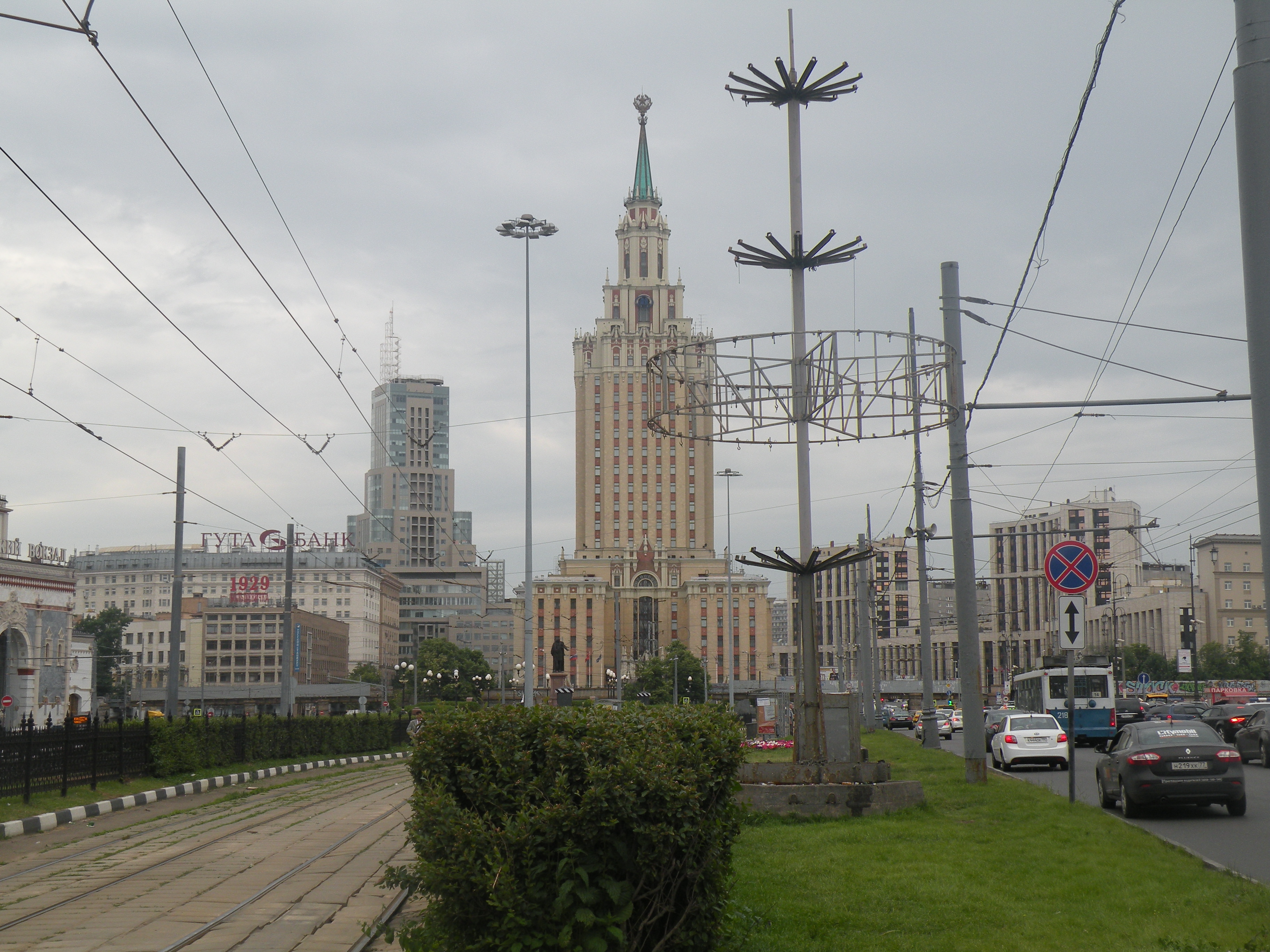
After arriving in Domodedovo airport, I stayed here, in the Moscow Leningradskaya hotel. Now owned by Hilton, it was originally built by Stalin as one of the leader’s ‘Seven Sisters’ (seven towers to decorate the Moscow skyline).
236

As you step out of the hotel, you’re greeted several railway stations built to connect different faraway locations, such as Belarus or the city of Saint Petersburg. Here are a few shots of these stations, each of them grand and significant.

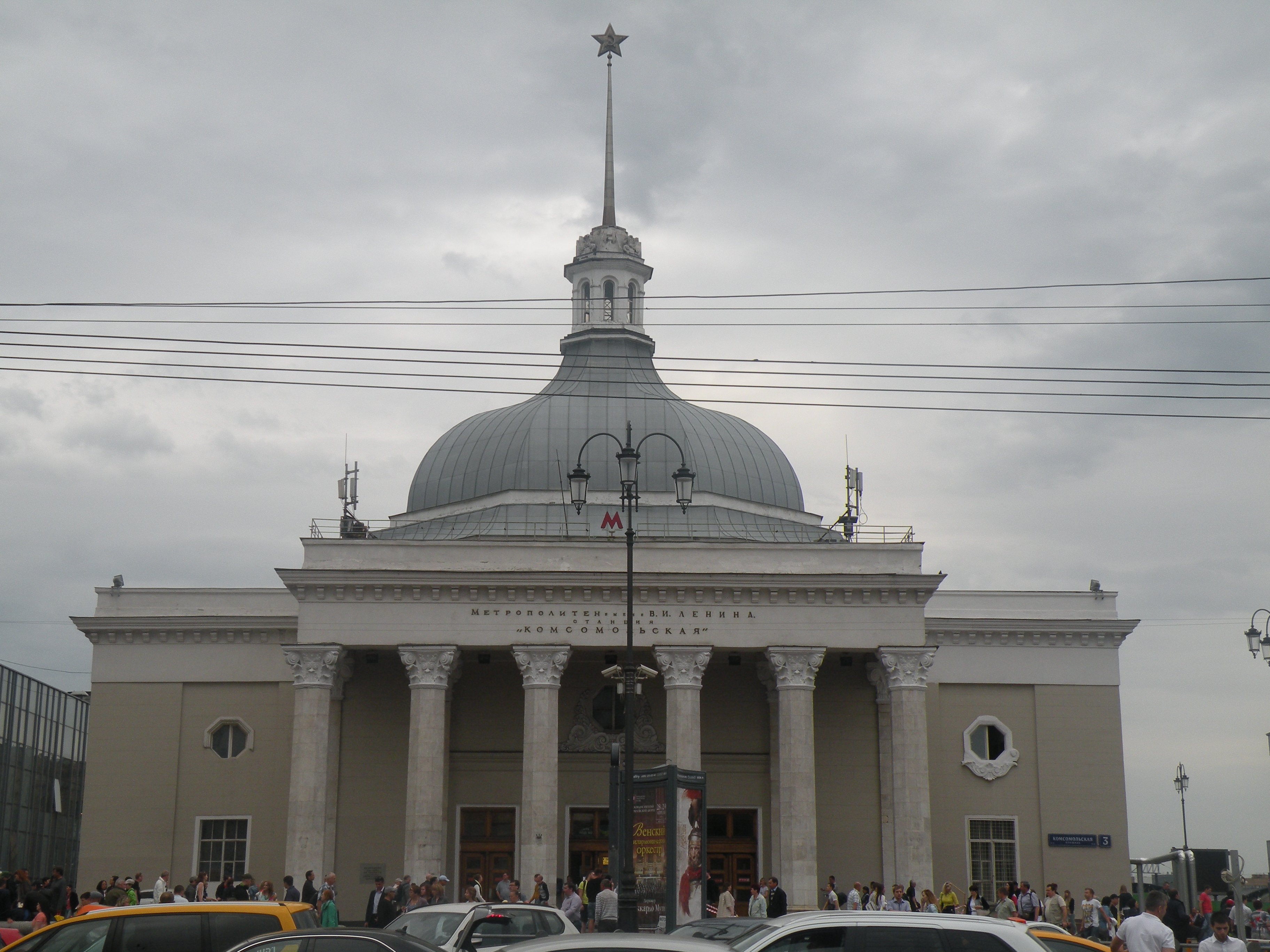
225

219

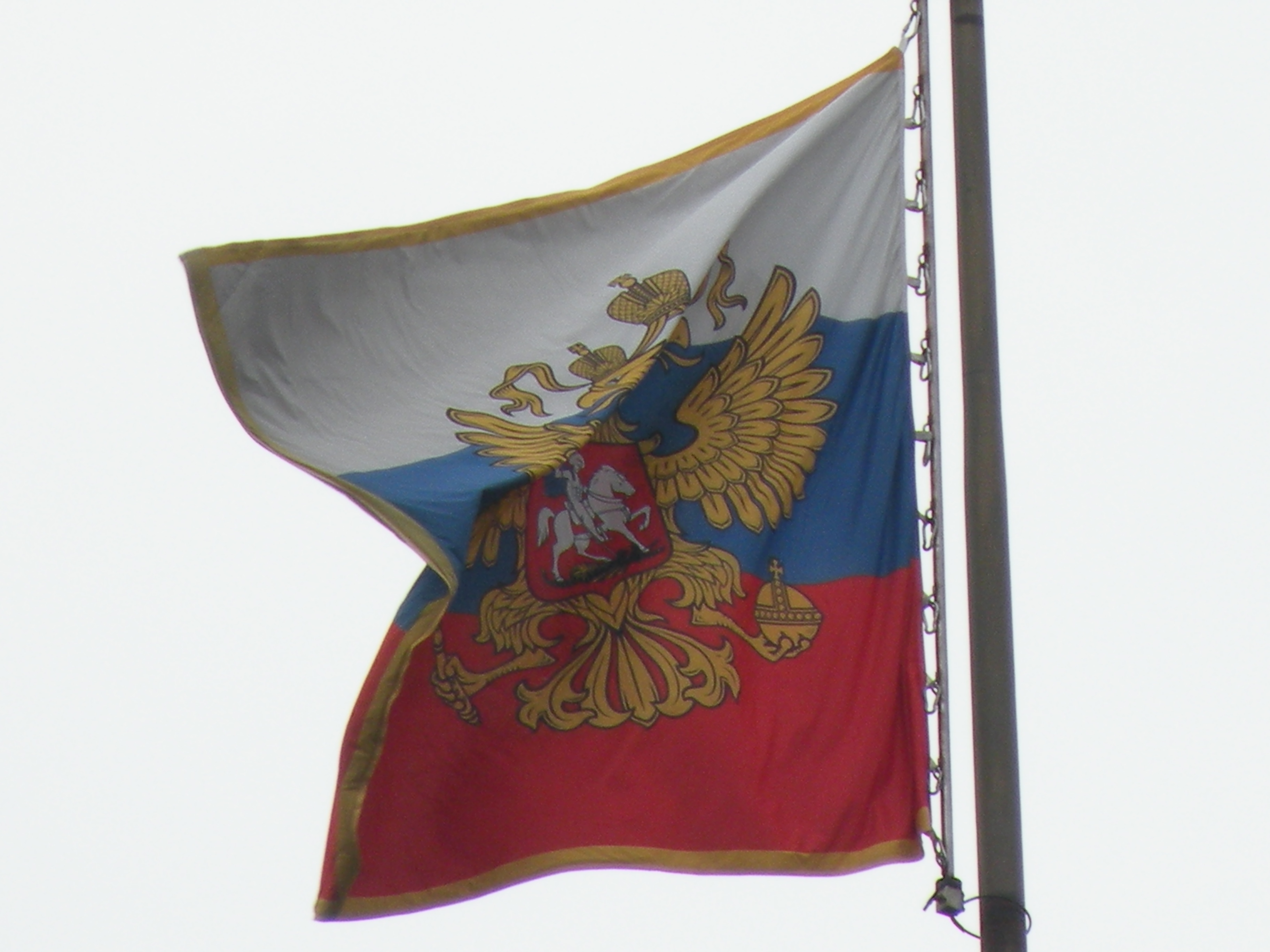
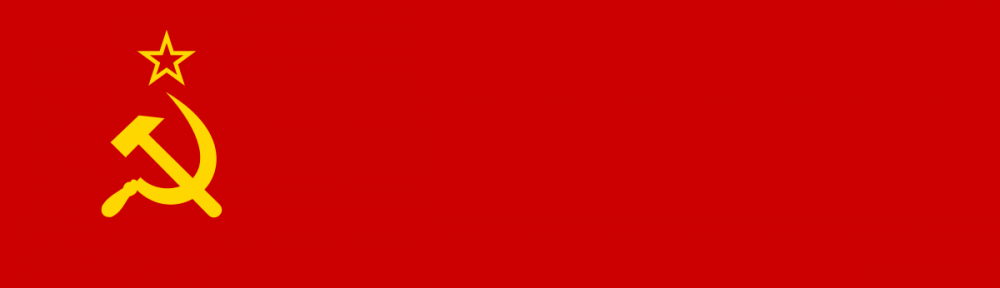
One thing you quickly notice is the casual presence of communist imagery, which nobody has removed since the dissolution of the Soviet Union. Small architectural details on these buildings, dating back to the Soviet times, suggest that the USSR has not vanished entirely. Perhaps the ‘spectre of communism’, which overthrew the tsar and built the world’s first socialist state, has not quite departed Russia…
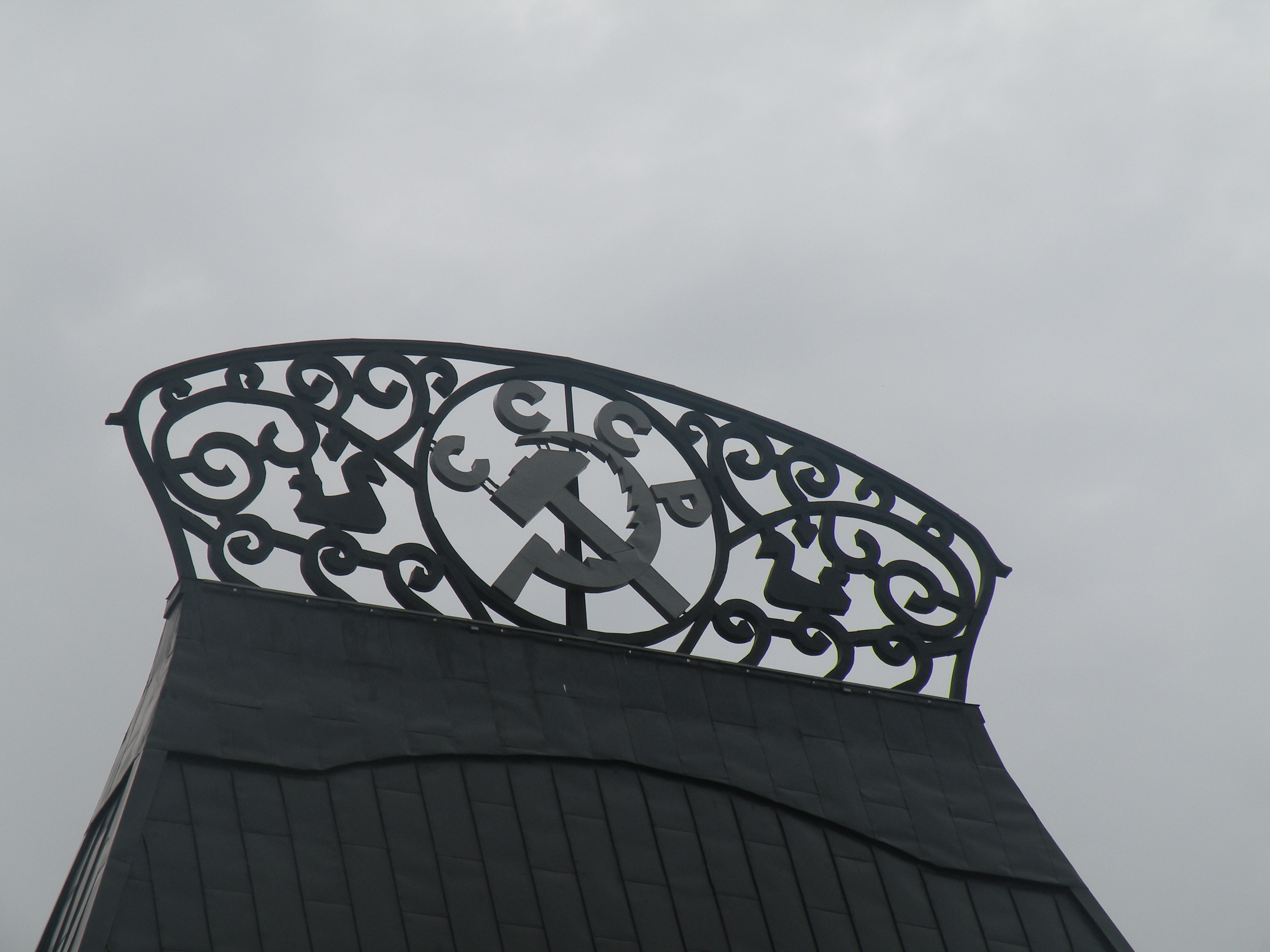
228

…on the other hand, perhaps it has:

173

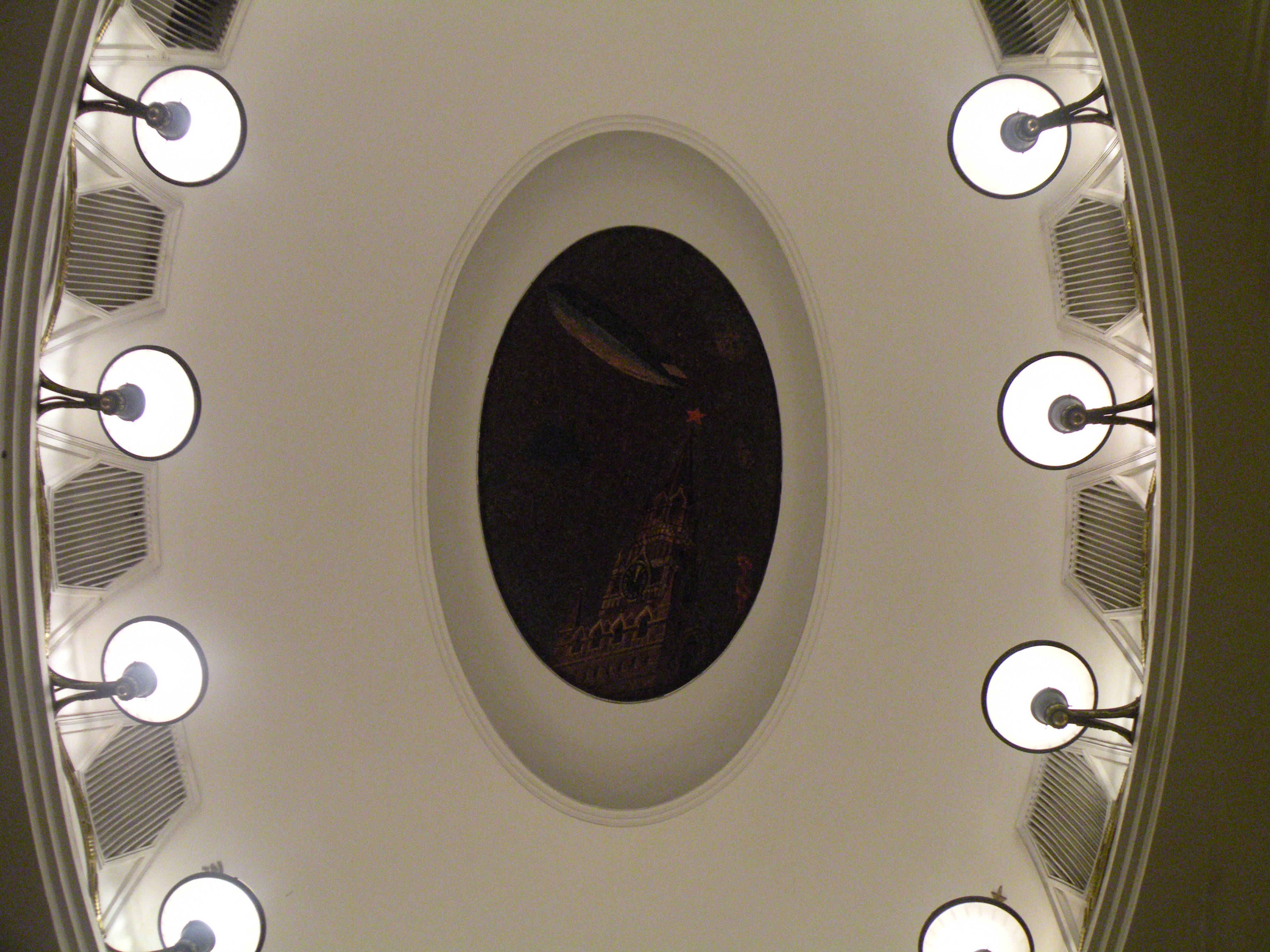
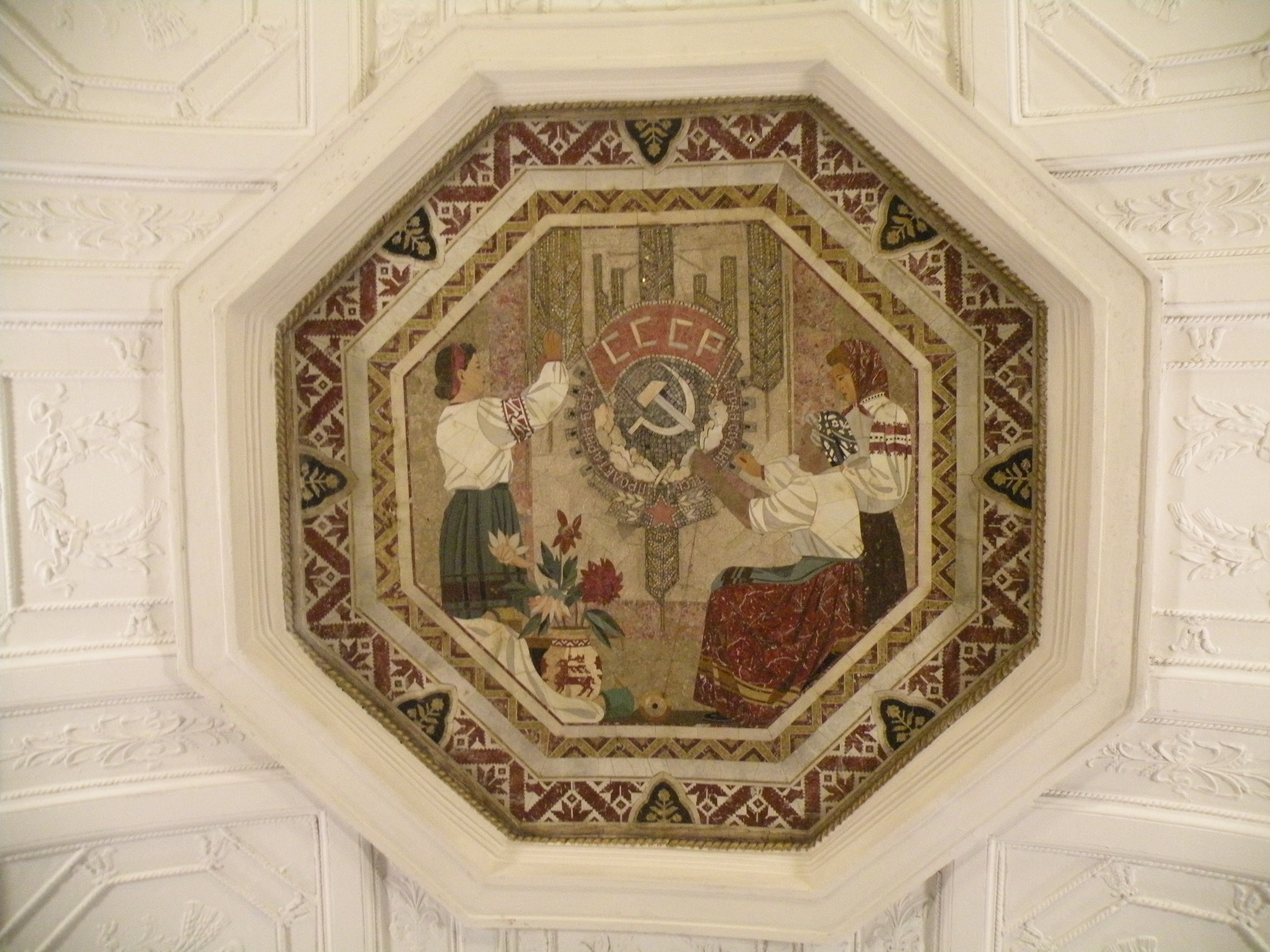
Another aspect of the city which I found astonishing was its series of underground railway stations, which were also constructed when Moscow served as the Soviet capital. In the 1930’s, rather than building an average underground rail system, Stalin decided to build a network of ‘palaces for the people’, constructing an array of subterranean estates of granite and red marble. Thanks to Koba’s project, Moscow now has a fantastic metro!

069

073

Here, statues of both soldiers and civilians litter the station. Regarding the statue portrayed, it is considered good luck to touch the dog’s nose (a ritual which students are known to practise before exams, apparently).
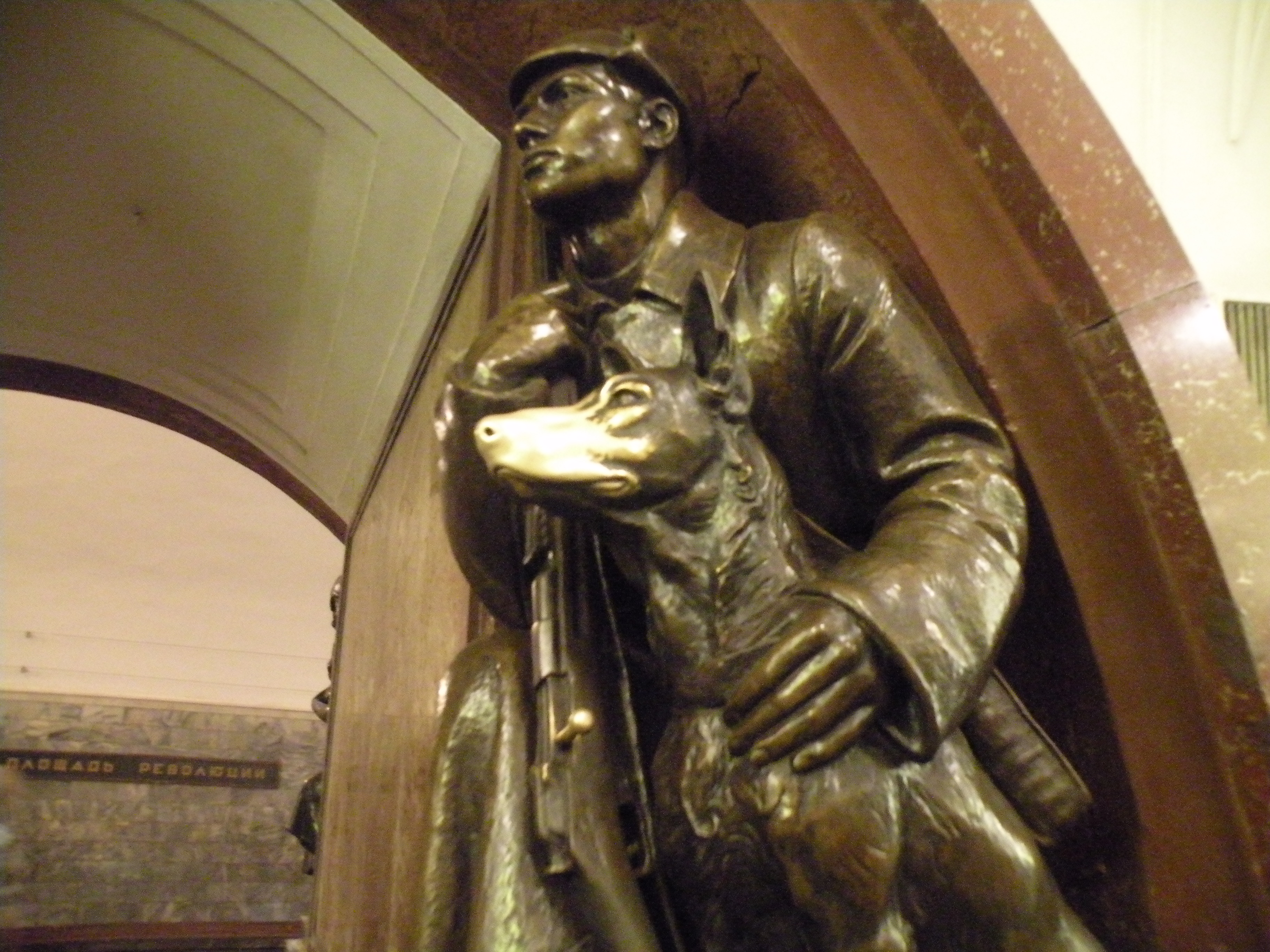
076

080

064

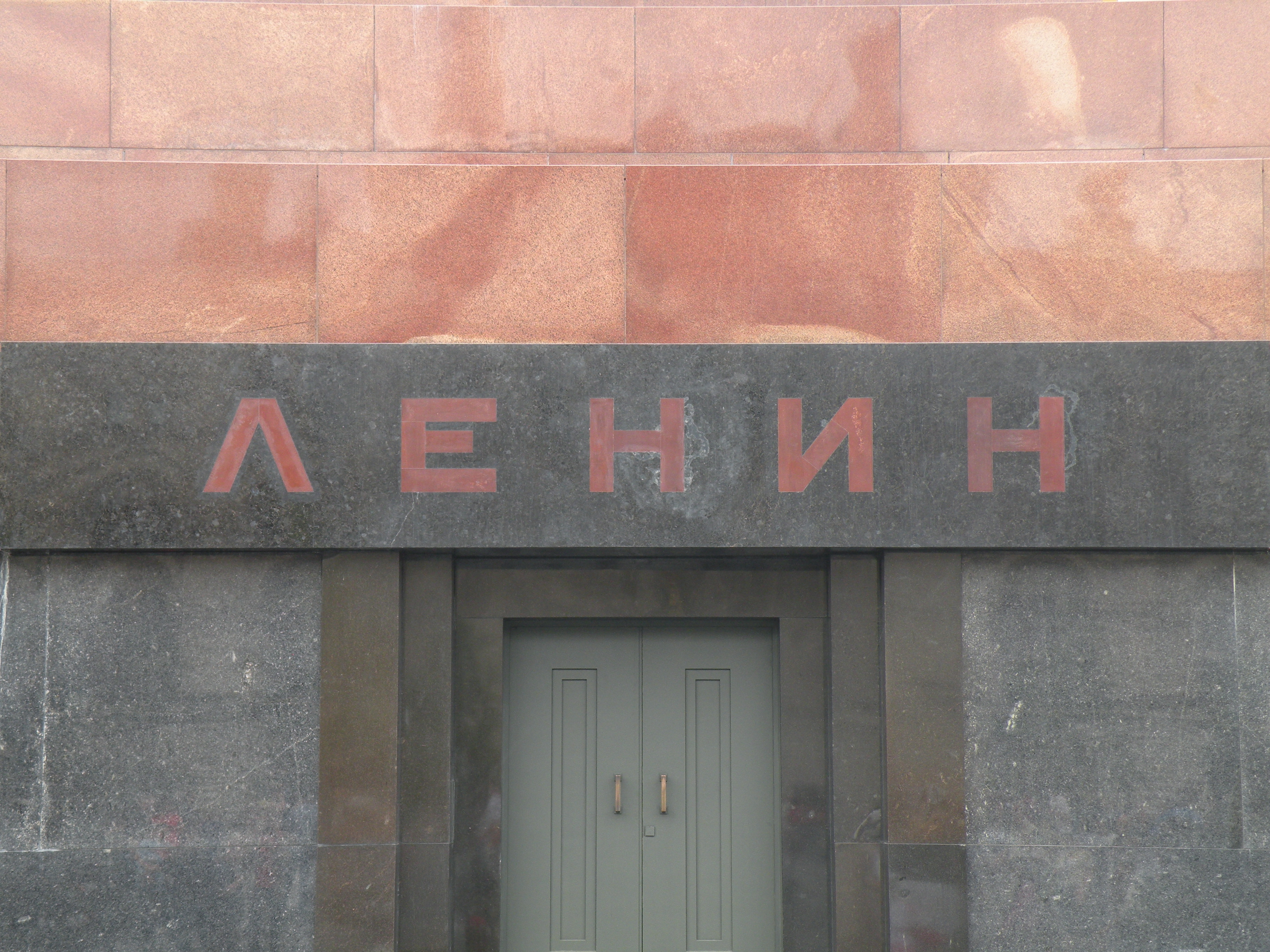
The ghost of Lenin still haunts the Moscow underground.
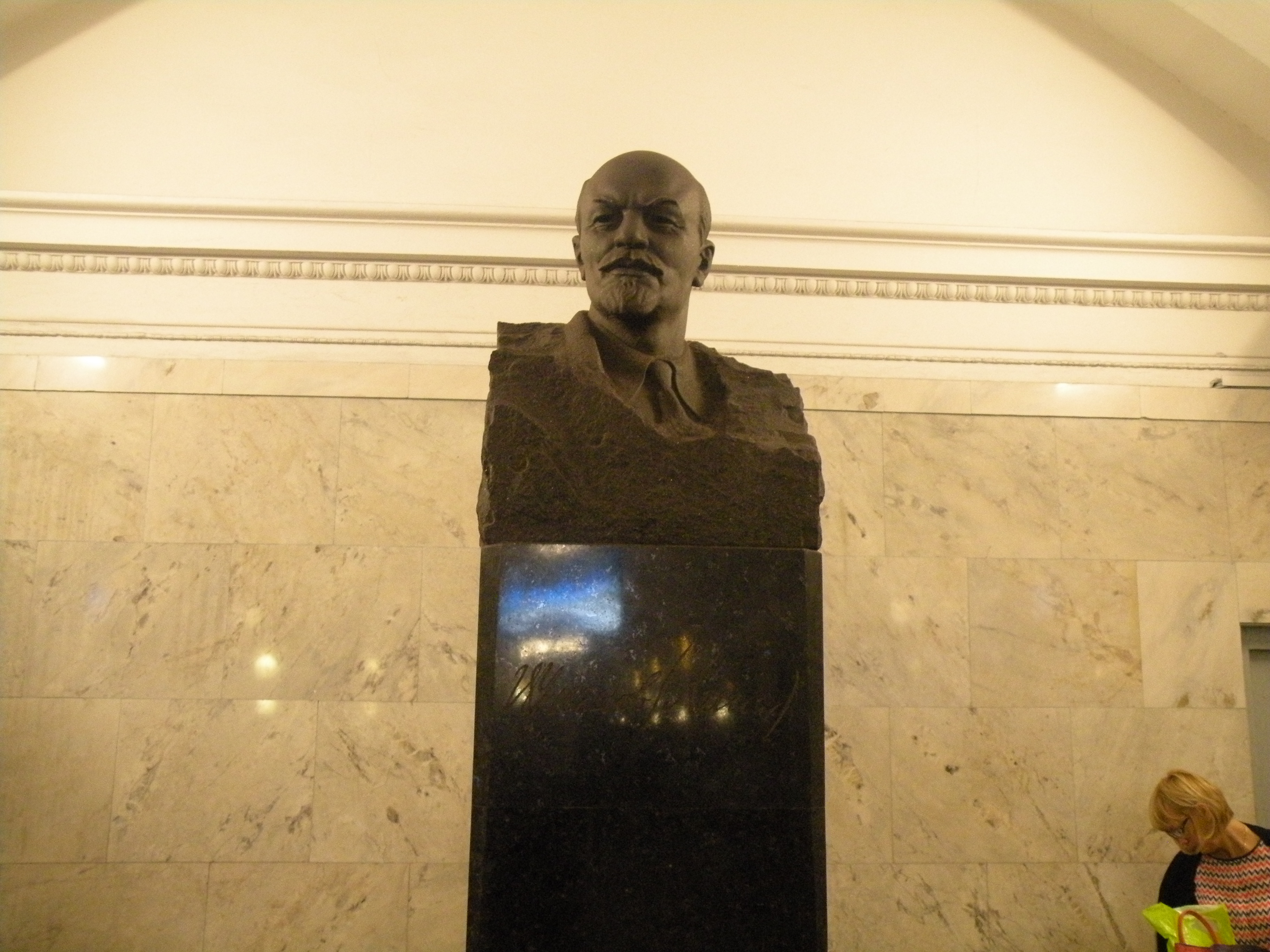
070

082

Marx stands opposite the Bolshoi Theatre
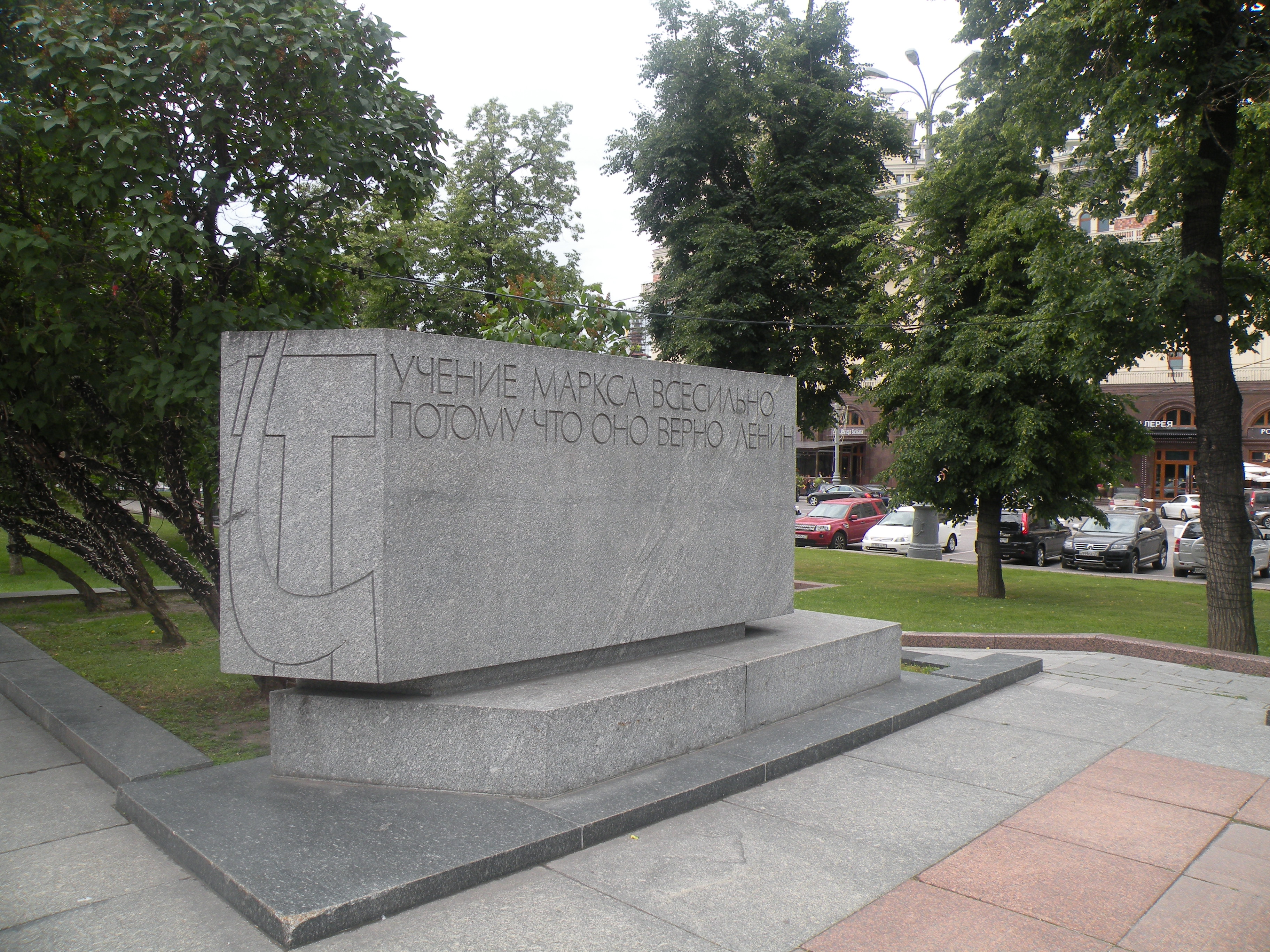
086

“For Lenin, the teachings of Marx were right because they were true.”
090

Marshal Zukov guards the gates of Red Square with a hand gesture that appears somewhat repressive, but apparently is just culturally Russian (you’ll see the same gesture made by the statue of the soldier if you ever visit the Soviet War Memorial in Berlin).

If you look closely, you’ll see that the horse is actually stamping on the Swastika with its bizarrely-straight front legs.

262

315

259

324

345

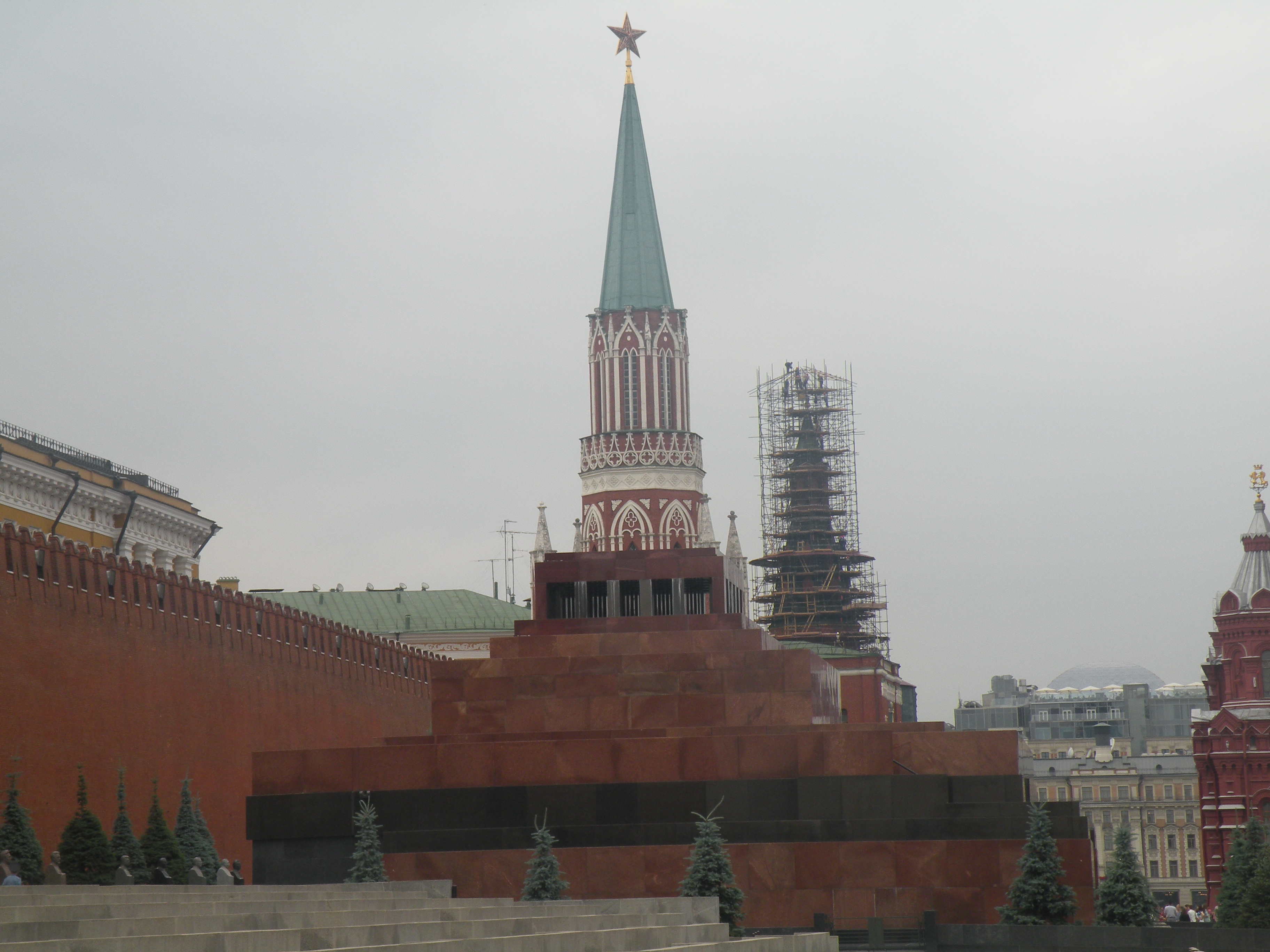
The red star below stands over the Kremlin Wall’s Spasskaya tower.

364

149

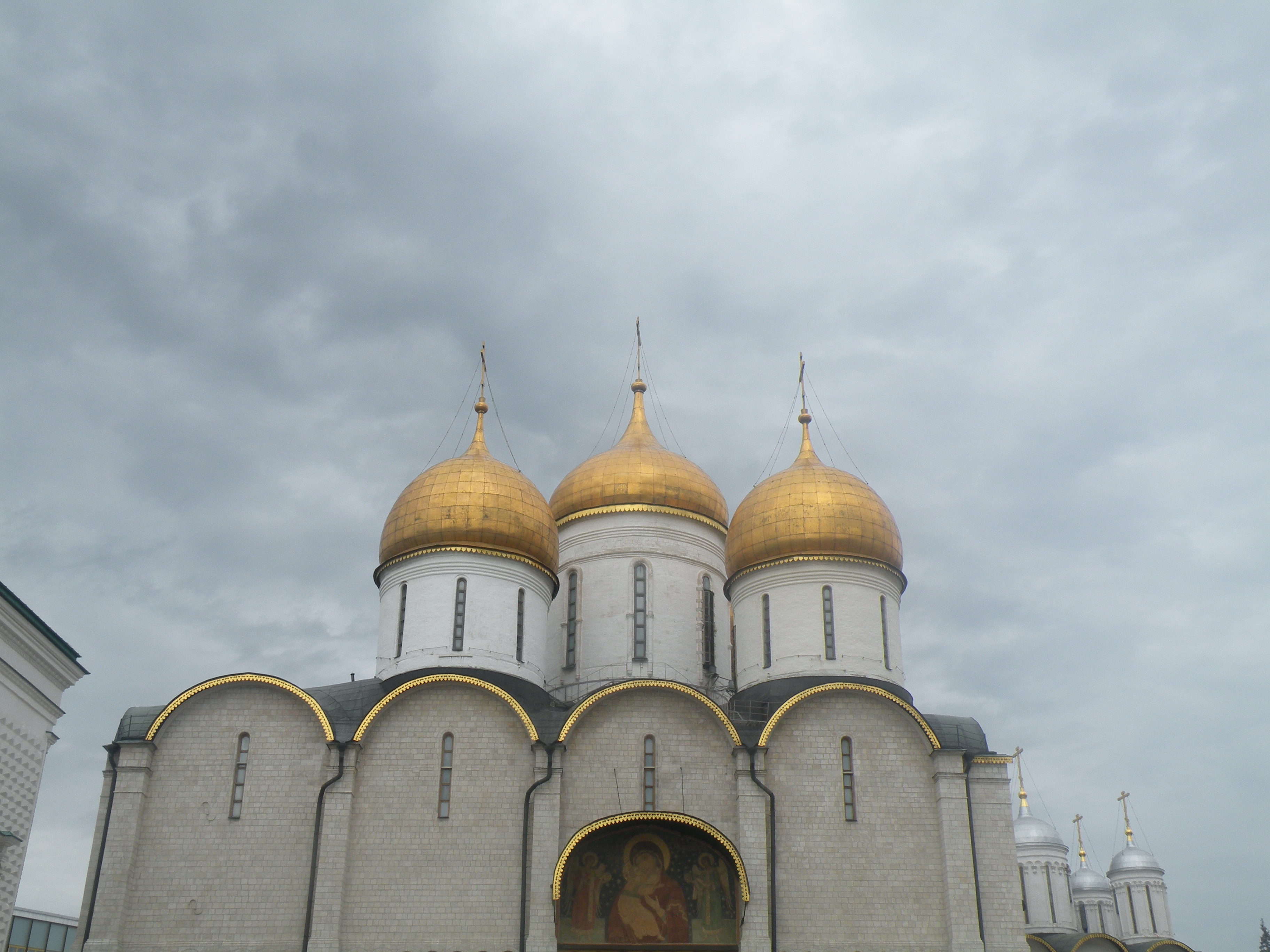
One of the multiple cathedrals inside the Kremlin’s grounds

147

Above is one of the two variations on the sign of the cross that I’d noticed in the country. Apparently, the slanting bar represents a ladder (the idea that one may step up to heaven or down to hell), and the additional oblong is representative of the original cross, which allegedly featured a plaque marked ‘Son of God’.
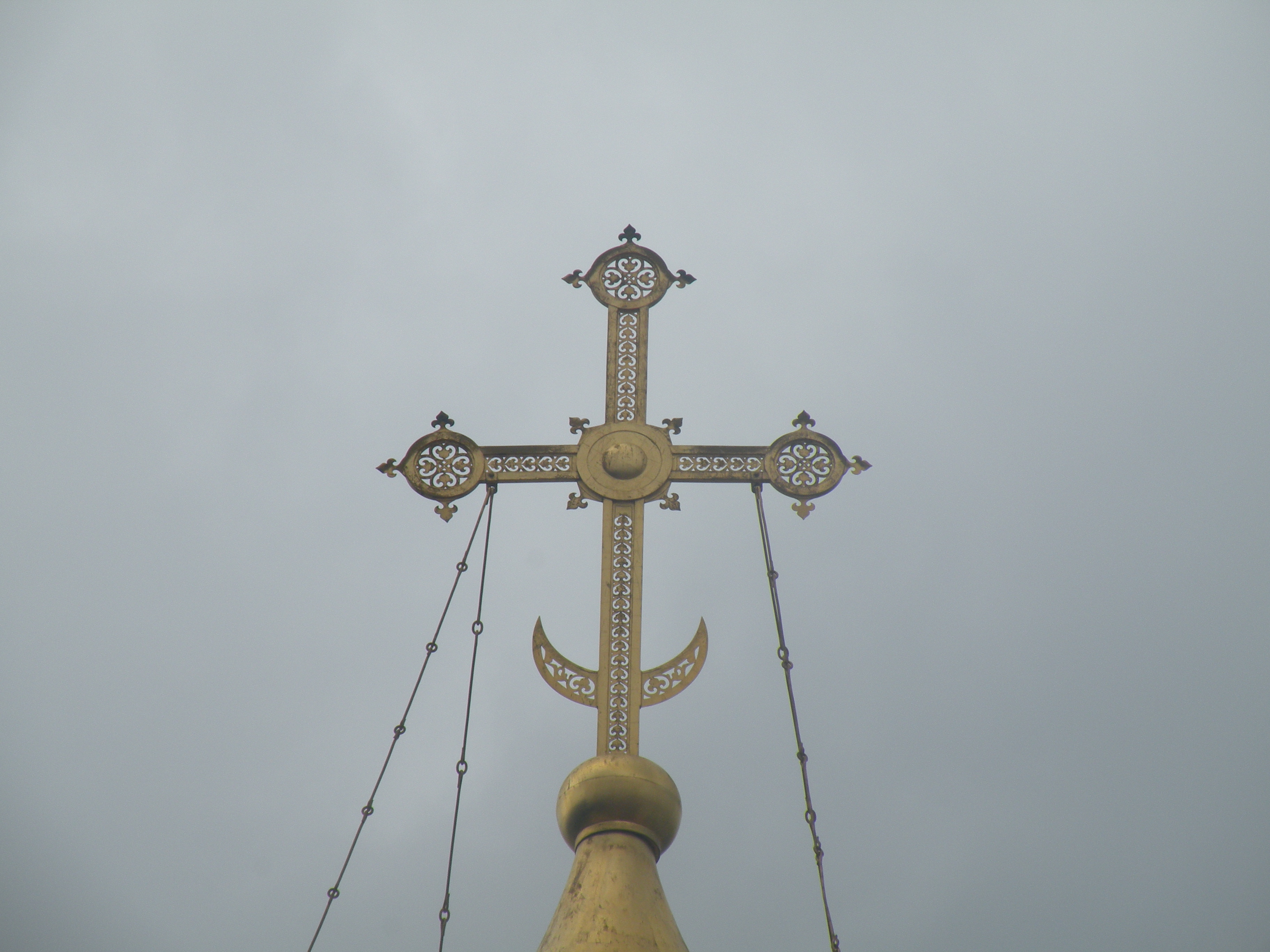
150

Here’s the other variation, featuring the crescent. The unofficial explanation for its presence is the idea that the moon beneath the cross symbolises victory over Islam, but the real one is that the moon is in fact not a moon at all, but a boat, representing the arc.
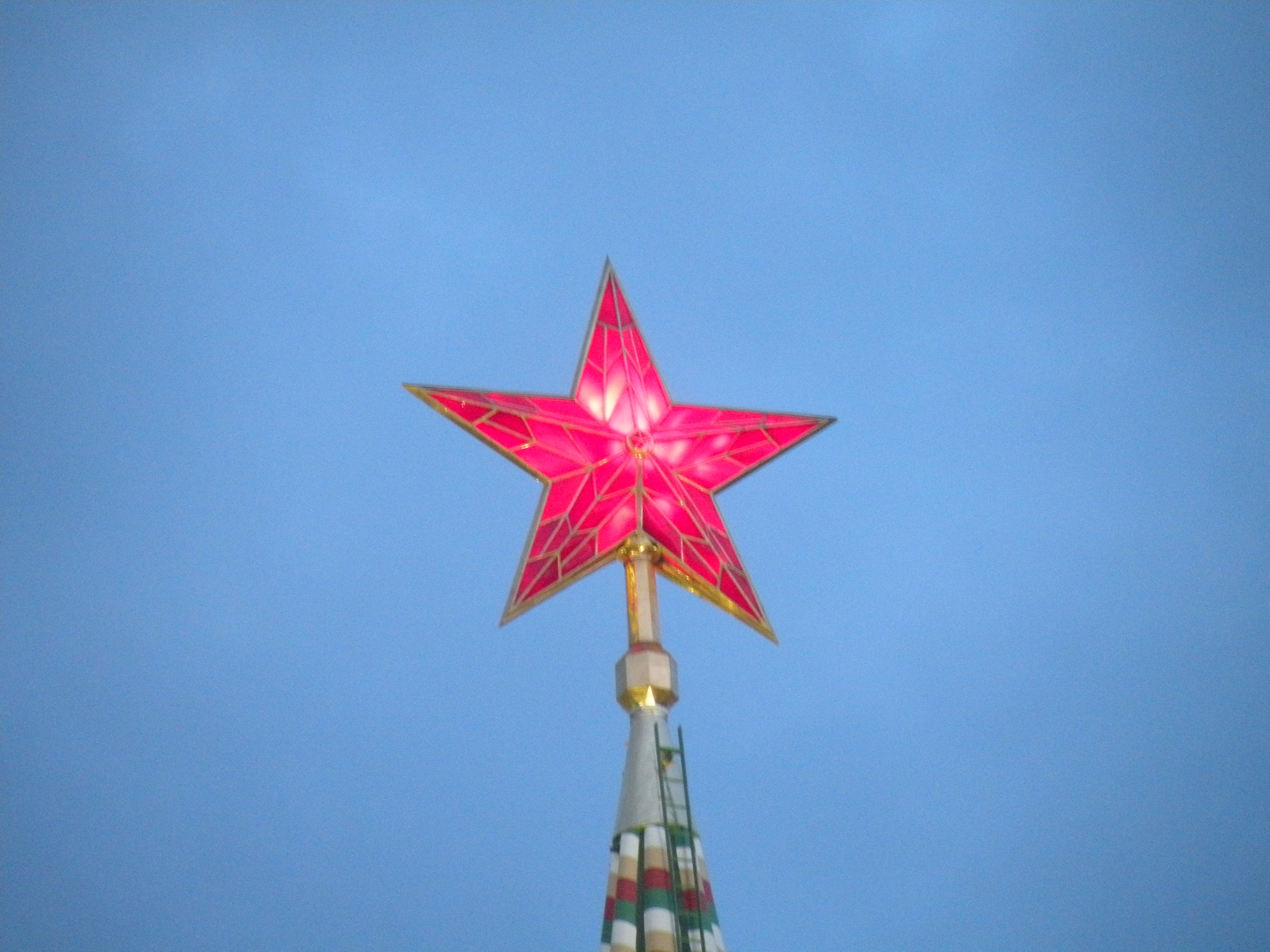
416

401

The frontier of GUM, Moscow’s leading department store

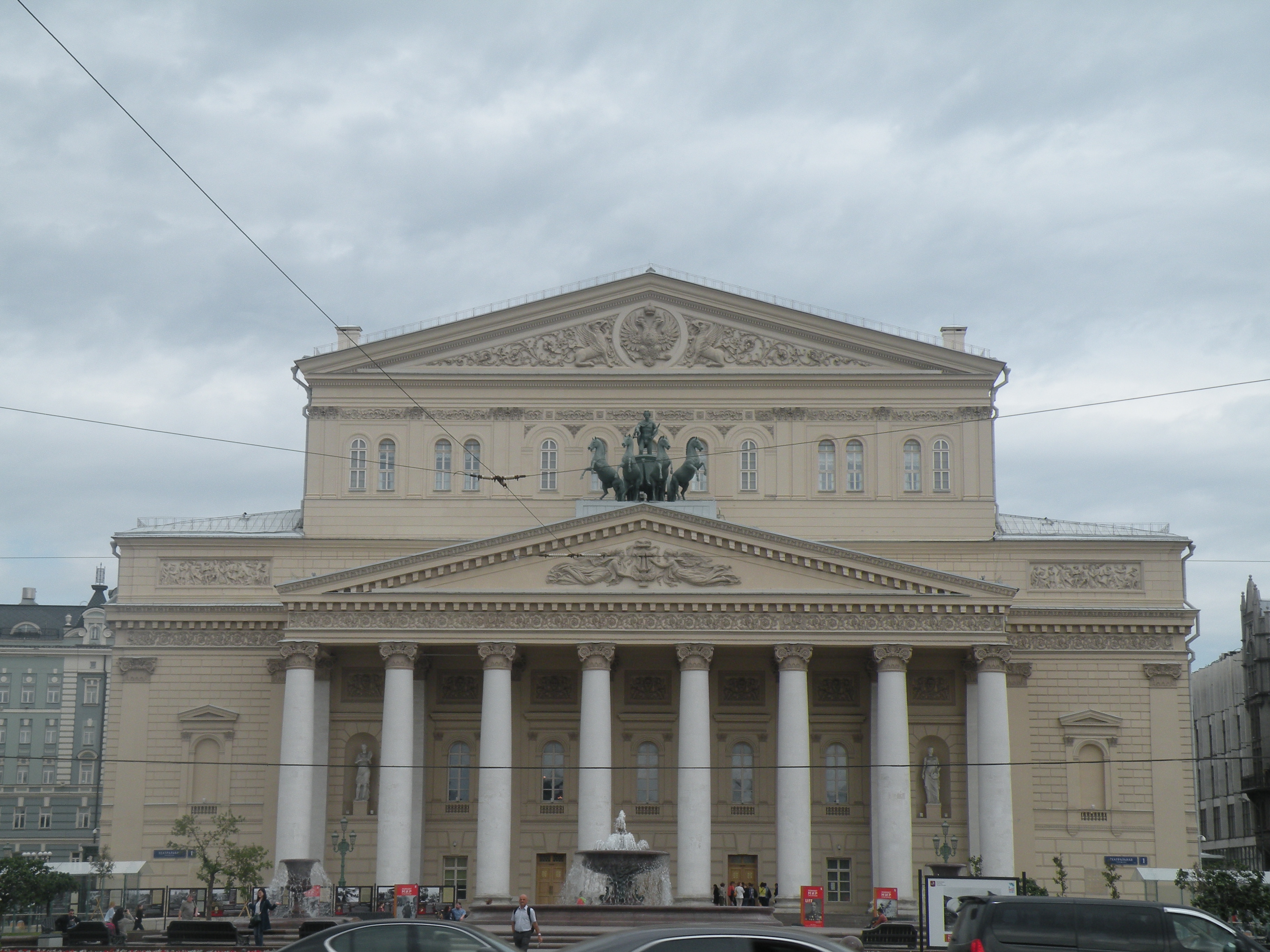
Finally, I give you the street outside the Bolshoi Theatre, under a downpour. This is almost definitely the wrong time of day for the rain qualify as such, but I learnt of an interesting Russian expression whilst walking through the rain in Moscow: when it rains whilst the sun is shining, it is referred to as ‘mushroom rain’, because these are apparently the optimal conditions for growing mushrooms in the forest.
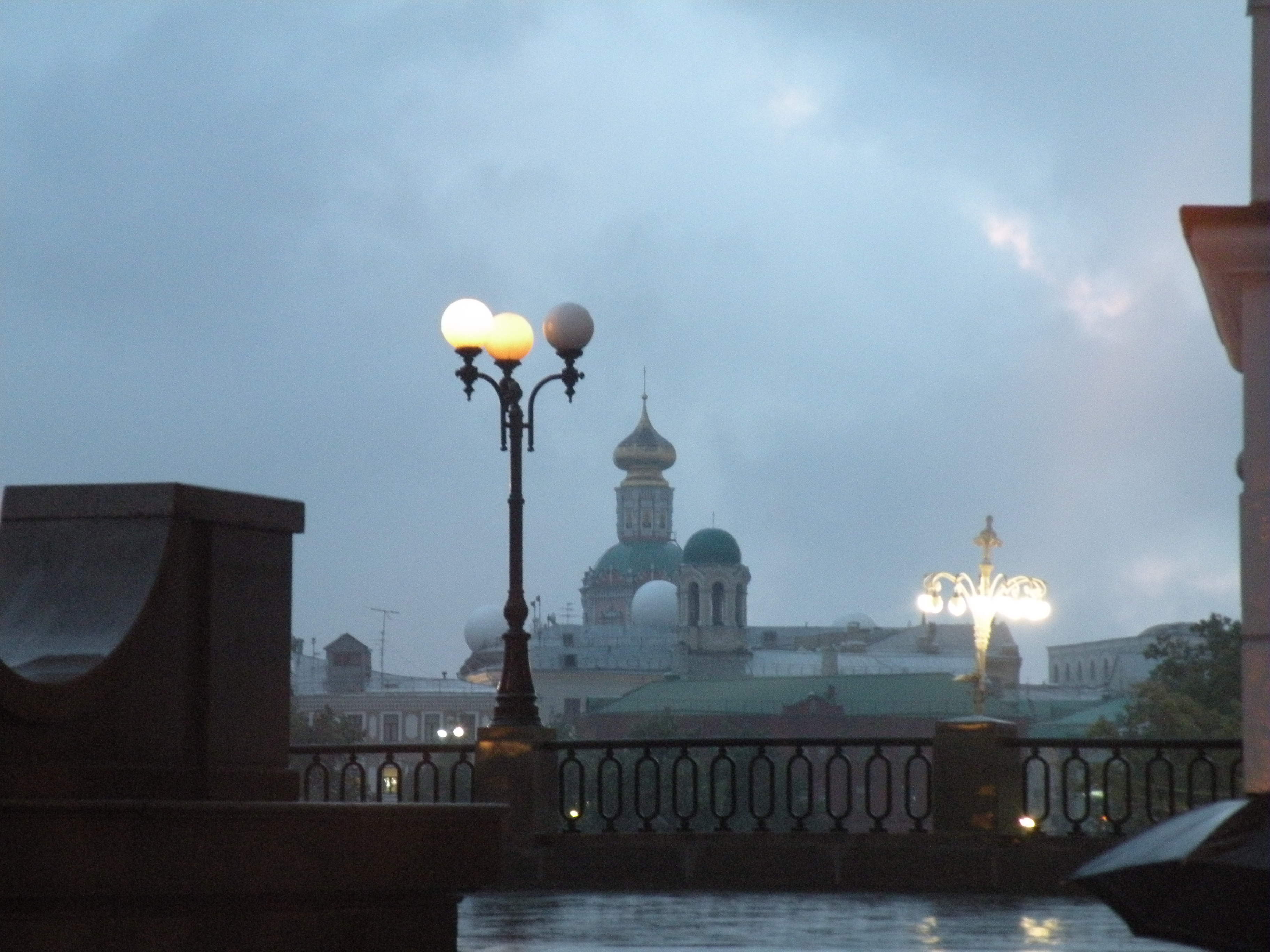
379

_________________________________________________________________________

If I was to summarise my trip, I could draw several conclusions from it. As I said previously, it certainly changed my attitude towards the country and the culture, alongside the previous ideas I had about the city. Before visiting, for example, I expected a somewhat cold and soulless city. I anticipated a very interesting journey, and hoped to see fascinating, but perhaps not beautiful sights, based on everything I’d heard about Russia. After seeing the place, however, my opinions have changed completely; I was struck by how modern, how stylish, and also how gentle the city was. With the wide streets, leafy parks and a surprisingly quiet and empty city centre, you could be in Prague or Paris. To put it into context, I visited Berlin last summer for a similar kind of holiday, which felt colder, and, in a way, harsher than Moscow did. Out of the two, I felt that Moscow was the prettier city.

158165

131

Another aspect of Russia which I had braced myself for was the stereotype of unfriendliness sometimes associated with Russian culture, though I certainly didn’t find there to be any truth behind such a view. In fact, everyone I met seemed polite and happy to help, and it actually proved relatively easy to buy tickets or order food through interracting with the locals, despite the obvious language barriers. Unless my experience was an entirely unique one, I can tell you that such a stereotype is incorrect, and that life as a tourist isn’t nearly as hard as it’s made out to be. Just remember to count the number of stops on the Metro, because, if you can’t speak Russian, you’re likely to forget the name of your station!

To cut a long story short, these two days have been fantastic, and to any potential travellers, all I can say about the city is positive. I hope to return someday, and would definitely recommend visiting.

До Свидания

– T.A.R.

Marxism is a Science, not a Religion


As promised, entries resume today, making it an appropriate time to address one thing that’s been on my mind in the weeks after my last post…

Despite the differences in opinion among communist circles, there are really only two variants of communist.

Some, I’ve noticed, manage to incorporate Marxism into their lives as a viewpoint, a belief, and nothing more. The orchestrators of the Russian October Revolution, namely Lenin and Trotsky, are good examples; they acted, commanded, spoke and wrote using Marxism as a tool, a guidance, and a scientific philosophy on the basis of which they would carry out their principles.

Others, just as knowledgeable in Marxism, and just as eager to apply it, look at the philosophy from a different stance. They treat communist theory as if it were the words of a prophet, and look to Marx, Lenin or Stalin as if they themselves were the divine preachers of such theoretical wisdom. Their great appreciation of socialist ideas transforms itself into a cult-like and almost religious appreciation of socialism, to such an extent that they begin to forget the central tenants and ideas of their philosophy.

As you might imagine, this presents a series of problems…

First of all, this tendency, which glorifying communism, actually contradicts it. Where it clashes with Marxist theory is not obvious, but we must remember that Marxism, whether correct or not, is a theory of science. It exists based on the idea that the development of society runs parallel to the development of the natural world, applauds rational and scientific thought, and is hardly compatible with the backward, illogical and religious adherence to ideology exemplified by many of its followers (especially Marx famously referred to religion as ‘opium for the masses’). Ask yourself this: in terms of this spiritual ‘opium’, where does Christianity differ from Marxism-Leninism? When both are treated as religious doctrines, it doesn’t.

An extreme example of the blurring between Marxism and religion is that of Stalinist Russia, in which the Communist Party was practically allowed to replace the Orthadox Church. ‘Lenin is with us, always’ was a phrase popularised under Stalin, who seemed not to let it trouble him that he was cultivating belief of a spiritual nature akin to the religions he was also trying to supress. Other examples can probably be found throughout history, but I hope (for any Stalinists/Stalin sympathisers reading) it does the job of highlighting just how irrational such regimes can become. Lenin was a great leader and a great theorist, but he wasn’t Jesus. Marx, Lenin, Mao and Stalin; they’re human beings, not deities, and perhaps we’ll remember these people for their contributions to the socialist movement, but to look upon them as divine and holy beings is beyond ridiculous.

In addition to this, I’d like to point out that many in this category, which often tends to be the Stalinists and Maoists of this world (I’ve noticed that communist philosophies to the left of Marxism-Leninism don’t tend to adopt such views), are highly illogical in their assessment of society, and especially of the communist world. In this respect, what I was talking about (the almost holy glorification of both the theory and its practitioners), can lead to further problems; if you look to Stalin, Mao or Kim Il-sung the way a religious believer may look to God, it’s not surprising that to you, these individuals must be heroes, and thus you’ll go to extreme measures to ensure they are so. At the same time, one may go to ridiculous extents to prove their theories or writings are true to word, immune from the possibility of even minor falsification, as certain Christians may claim about the Bible. This is, of course, just as irrational.

Yet equally bizarre is the manner in which these people prove such to be true, or simply justify their beliefs: a favourite technique of these types of people, and one which is not criticised nearly enough, is historical denial. Just look at the number of leftists who deny Stalin’s crimes, who claim that the repression which exists in the DPRK is merely a conspiracy cooked up by imperialist western media. There are a surprising number of people who end up falling into such trap, to the point where they distort the whole of history to support their beliefs.

Nope. Definitely not a Gulag. Can I get away with blaming this on western imperialism? Probably...

‘Nope. Definitely not a Gulag. Can I get away with blaming this on western imperialism? Probably…’

Is this Marxian? Is this the kind of mentality you’d expect from those who uphold a view which thrives off the analysis of class history? It’s well known, even outside of communism, that the philosophy relies on the observation of historical patterns. It’s thus obvious that anyone distorting history in this way, altering the past to suit their ideals, is transforming events which could prove vital in understanding society from a Marxist perspective. In other words, these people, who tightly cling to communism as an ideology rather than a philosophy, actually demonstrate an ignorance and a betrayal of Marxist principles whilst attempting to defend views which they believe to be Marxian. What’s worse is that, on the whole, I don’t believe these people know they’re altering history. They believe the atrocities we hear of are a concoction of lies drip-fed to the population by the government, and this is a dangerous thing. Certain stories are undoubtedly twisted, and some, if not all, are obviously biased, but we can’t escape historical truth, and communists, perhaps more than anyone, should accept this.

So, if this is the case, then what can be done about it? What is to be done (Leninist reference intended) about the fact that a great proportion of Marxists globally have managed to turn the theory on its head and produce something of an embarrassment to the traditional principles of communism? Sadly, I don’t feel there’s a lot that can be done. We just have to accept that a great deal of the world, including the former communist world, lives (or lived) according to these strange and perverse views. Nonetheless, I urge any leftists out there not to let themselves be absorbed into this twisted form of socialism, and as for those who glorify Mao or Stalin (or, for that matter, Marx or Engels), who look to their works like a holy scripture, and who consider themselves the rightful heirs of ‘Mao Tse-tung thought’ or whatever other titles they grant themselves, I encourage you, quite frankly, to wake up from this delusional dream.

The image was provided by Gerald Praschl from Wikimedia Commons. Here is a link to its license: https://creativecommons.org/licenses/by-sa/3.0/deed.en