Communism and the Kurdish Question

Last Wednesday, a Turkish policeman made the headlines due to events on a street in the Diyarbakir region, eastern Turkey.

In a likely peaceful scene, it would seem improbable that Mehmet Uyar’s conduct as a police officer would be required, and sat in front of a teahouse, he probably didn’t suspect anything. It was then, however, that a man shot at him from a car, wounding Uyar and another innocent civilian (according to the news agencies Dogan and Anatolia).

Both were rushed to hospital, yet it was clear nothing could be done, and they soon died of their wounds. It is reported that another individual was also wounded in the shooting, though not fatally.

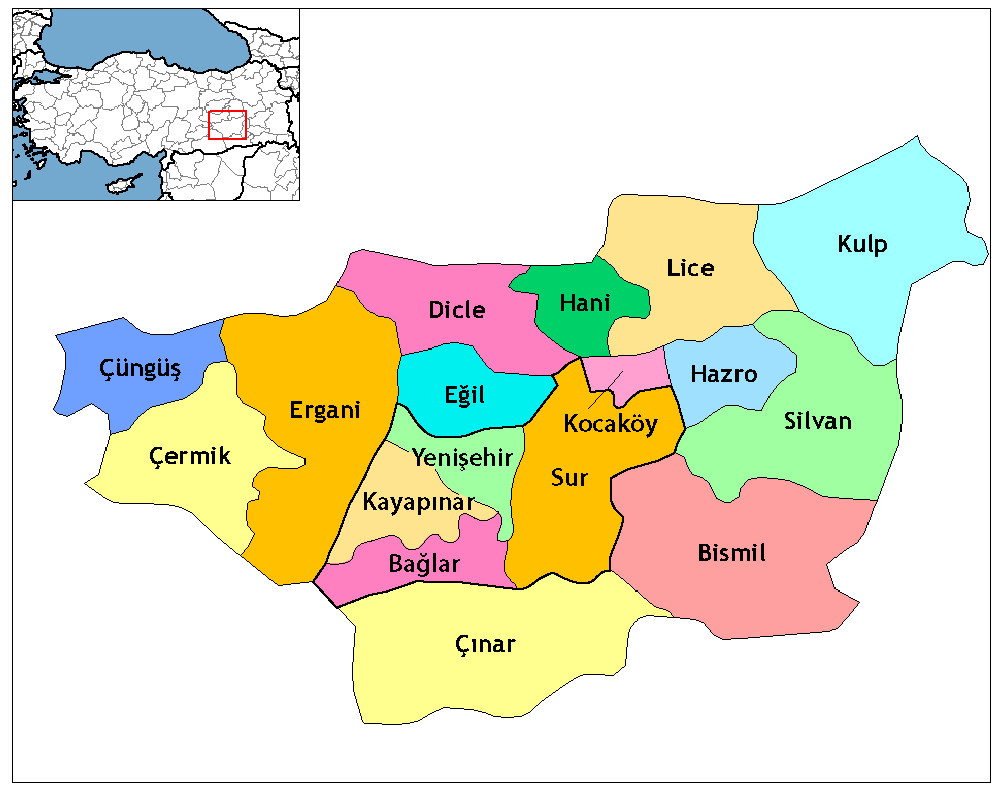
Diyarbakır_districts

Here is the region in which the attack took place (Uyar was killed in the Cinar district)

This particular attack was blamed on the Kurdistan Worker’s Party, a Kurdish militant movement of the radical left, and (provided the allegations are correct) serves as another reminder of the Kurdish struggle in the region. As alluded to by the movement’s reference to Kurdistan, such a struggle is oriented largely around the long-term goal of founding an independent country where Kurds may live free of oppression,* this being the topic I’ll focus on today; the purpose of this entry is to look at the subject through a Marxist viewpoint. 

To give my initial view, I do not support the struggle for an independent Kurdistan. To explain in detail why, and why I believe this to be the correct Marxist position to take, I’ll examine the issue from two perspectives. The first will concern moral right and wrong (in the eyes of a Marxist), the second, Marxism itself…

Kurdish-inhabited area by CIA (2002).jpg

Oppression against the Kurdish population is obviously a pressing issue, and I am wholly supportive of their liberation from tyranny, alongside their courageous fight against Islamic State. It is just the idea of a Kurdish nation that I’m inclined to oppose, for Kurdistan would be a state founded upon the presence prominent ethnicity; not only would this lead to discrimination (just look at Israel, a country founded as the homeland of the Jews, in which discrimination against the local Arabs is not only present, but often aggressive and violent) but it would distort the idea of genuine equality among racial groups, for the notion of Kurdistan proposes the ‘shutting off’ of the oppressed through the drawing of national boundaries. This would inevitably compromise any effort to achieve harmony between ethnic or racial groups, which, as an internationalist, I am strongly opposed to. 

On the topic of communism, I also have no doubt in saying that the former (or rather, the former’s revolutionary implementation) would also be delayed by Kurdistan’s existence, as whilst the emancipation of the Kurds is one thing, the emancipation of the proletariat is quite another. Thus, the ethnic struggle would only serve as a distraction to the real plight of the Kurdish underclasses.

A great example of a Marxist approach to these issues is that of Karl Marx’s views on the tensions in nineteenth century Ireland; whilst Marx did feel that the country would be better off without British rule, he believed that the national struggle in the soon-to-be rebublic would only prolong the communist revolution in Britain.

I say this not just for the purposes of discussion, but also to other leftists who may sympathise with the national struggle. The Kurdistan Worker’s Party, for example, would undoubtedly consider themselves a left-orientated organisation, yet are leading the fight for an independent racial country. I thus warn any socialists to beware of this trap – it may seem like a harmonious solution, but the founding of new states and the breaking up of ethnicities can only be a temporary one. In the long run, true equality will only be persponed.

*this idea was abandoned as a central idea of party’s leadership, yet was nonetheless one of its founding principles, and is still prominent in the region today

On Trotskyism

What is Trotskyism?

Unlike specific doctrines or philosophies such as Leninism, or perhaps Marxism in general, Trotskyism has no one definition – it is simply a collection of the ideas and theories put forward by Leon Trotsky. However, whilst perhaps not as easy to summarise as the ideas of Marx and Lenin, they are by no means insignificant, for Trotsky’s followers founded one of the two key movements which worked to redefine twentieth-century communism; alongside the Stalinist interpretation of Soviet-style Marxism (which later developed into Marxism-Leninism) Trotskyism split communism in two, forcing Marxists everywhere to take sides.

To give you an idea of what exactly it calls for, here is a brief summary of the ideas and theories it entails:

  • A strong adherence to the international revolutionary movement, which fuels the theory of Permanent Revolution (a theoretical argument that states revolution can take place in backward, agrarian countries such as Russia, so as long as there is a simultaneous international revolution to strengthen it)
  • An encouragement for the involvement of workers in the state system, and the criticism of ‘Stalinist’ regimes for their excessively bureaucratic and authoritarian interpretation of communism
  • A general critical attitude towards Stalin’s Russia and the Soviet Union after 1924, due to its betrayal of both the aforementioned values

Recently, I decided that I, myself am a Trotskyist, this being the inspiration for today’s post. For a long while I’d thought of myself as somewhere to the left of Marxism-Leninism, so I was looking closely at tendencies such as left communism, ultra-leftism and Trotskyism to try and determine which category I fell into, at which point I decided that my views represented Trotsky’s ideas more closely than anybody else’s. Given that I’ve written several paragraphs on the such ideas, you may wonder why exactly I’ve chosen to do this, or what relevance they have today that would make writing about them worthwhile. I’ll answer this in a short while – first, I think it’s important to understand them from a historical perspective, allowing us to comprehend their development in society.

Below is an excerpt from the document ‘For Trotskyism!’ which can be found on the homepage of the International Bolshevik Tendency, a modern-day Trotskyist organisation, where the movement is described…

It was verified in a positive sense in the October Revolution in 1917, the greatest event in modern history, and generally negatively since. After the bureaucratic strangulation of the Bolshevik Party and the Comintern by the Stalinists, the tradition of Leninism – the practice and program of the Russian Revolution – was carried forward by the Left Opposition and by it alone.’

This says it all: Trotskyism has a bad name. Ever since such ‘strangulation’ the idea had developed taboo connotations, even becoming an insult among communists. As a result, the number of Trotskyist movements is relatively small, and was probably even smaller in the days of the USSR. Following his departure from Soviet politics, Trotsky was the great outcast, the traitor, the enemy of the Soviet regime, and any of his followers were inevitably handed the same label.

Not surprisingly, then, no socialist states have arisen in accordance with Trotsky’s views or theories, and the few who adhere to such have been forced to get their word across through whatever tactics are available, such as electoral participation or entryism (a good example of the latter being Militant, a Trotskyist organisation in Britain working within the Labour Party throughout the 1970s and 80s). In other words, it would appear that Trotskyism, for the most part, died with Leon Trotsky.

undefined

The organisation’s logo

So, coming back to the question of relevance, it may seem to be the case that these theories, written over seventy years ago and only partially developed since, are far from relevant; one might be inclined to take the view that it was an ideology rooted out of the communist movement long ago, which has since been rejected worldwide, and even today is still on the side-lines of leftist politics. After all, Stalinism aside, who’s to say that there wasn’t a rationale behind Trotskyism’s rejection?

I, however, would disagree, and would take the view that time has actually helped prove Trotsky correct,  an example of this being the fact that his ideas are centred on a criticism of the Soviet system (or rather the Soviet system as Stalin had modelled it) and thus they deserve at least some credit, purely due to the fact that the Soviet Union collapsed. I’d see it like this: Socialism in One Country, the policy which, originally adopted under Stalin, influenced the country henceforth, halted efforts to spread the revolution beyond national boundaries. Thus the USSR, like its European satellite states, was left with no option but to try and cultivate socialism from within, which led to stagnation, corruption, and ultimately, failure. I believe that this is proof, or at least hard evidence, that Socialism in One Country is impossible, thus making Trotsky’s argument especially perceptive.

Obviously, I don’t mean to argue that Trotsky’s word was entirely unfalsified – that would be counter-scientific and thus contrary to the spirit of Marxism –, and he did create work that was also proven inaccurate, but I do believe that his ideas and his contributions to Marxist philosophy are worthy of recognition, and, what’s more, worthy of consideration today. In a world with no Soviet Union, after the fall of Stalinist communism, today’s Marxists definitely need to start searching for alternative solutions.

I’d say it’s about time, nearly a century after they were first discarded, to rediscover these theories left on history’s mantelpiece.

The Birth and Development of Capitalism

On Tuesday 14th, many undoubtedly celebrated Bastille Day, paying respect to the rebel movement behind the French Revolution.

Probably the most significant event in eighteenth-century Europe, this revolution reshaped European history, changing the face of France forever. For anyone unaware of what actually occurred during this remarkable few years, violence broke out across the nation after the Bastille was stormed by revolutionary forces. Such violence would later overthrow the monarchy, throw the country into chaos, and trigger a series of conflicts extending as far as the Middle East, securing it in the minds of many generations to come. Even with these drastic outcomes aside, it still deserves a place in world history, for this was the event that brought about an economic system still standing today; this was the event that brought about capitalism.

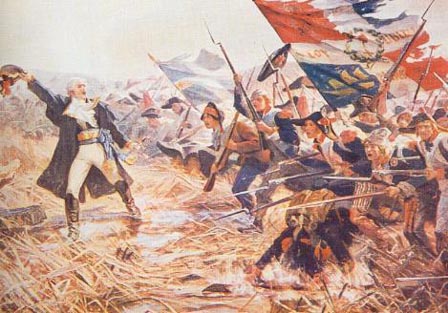
Bataille de Jemmapes 1792

Bataille de Jemmapes, 1792

The idea of a capitalist revolution may sound foreign to you, which is understandable; in a world where capitalism has long been the system which nations have tried to prevent revolution from overthrowing, the thought that it could exist as a revolutionary theory may sound strange to many, yet just like communism, capitalism had to start somewhere, and 1793 is one of the most profound examples of such an instalment. If the transition it enacted isn’t obvious, we have to remember that feudalism – the system’s predecessor – were the days of landlords, peasants, absolute monarchy, and a heavy religious influence on the populace. All of the above were revoked or transformed after the transfer of power took place, and the main focus of production was no longer the peasants labouring on the aristocrat’s land, but the workforce in the factories of Paris, Lyon or Toulouse.

However, although possibly the most dramatic, the transition in France is obviously not the only example; it is believed by many that capitalism originated many years ago, in the regions of northern Italy, and the ideas of a revolution against feudalism can be seen in the English Civil War, the European Enlightenment, and events reaching as far back as the Crisis of the Late Middle Ages. To give you an idea of how long unrest had been present, Europe – arguably the most advanced continent at that time period – experienced almost half a millennium of tensions and trauma with the rise of the new productive means. As a result, society saw many profound changes up to the late eighteenth century, at which point France had finally reformed its economy.

But we have to remember that at this stage, many nations were still stuck in the dark ages of serfdom, and though they would later progress, they did so in a different manner. In the podcast ‘Is Marxism a Science?’ provided by wearemany.org*, the speaker David Whitehouse looks into this when it refers to the German transition to capitalism, which, whist revolutionary in its own way, was not dramatic or profound like that in France. The states of Germany, as Whitehouse explains, were yet to catch up with more advanced European nations, and thus constructed industrialised economies whilst still under feudal leadership. The same can be said for the third world, which, still not completely capitalistic, relied on this kind of ‘uneven development’ (as he puts it) to allow progression to occur.

1024px-1909_Carl_Stilling_Schmiede_anagoria

Carl Stilling: The Forge – Germany, 1909

We can also see how such development has possibly occurred on a deeper level in countries like Russia or, perhaps more profoundly, China, for these were largely feudal and backward regimes, yet in both, communist revolutions (or, at least, revolutions claiming to be of a communist nature) took place. Here it would appear that not only has development occurred on an uneven level, with both feudal and capitalistic features present, but it has almost completely skipped a stage. Whether or not these revolutions were truly Marxist is a debate for another time, but the preface to the Communist Manifesto’s Russian edition talks of the peasantry possibly building communism in the country, suggesting that such a progression may be possible, and thus and thus that capitalism need not always develop fully.

Even if this isn’t the case, we can see through this pattern of mixed progress – where undeveloped societies were forced to prematurely catch up with developed ones – the extent to which capitalism has transformed the world through its own evolution; western Europe and North America have practically raced ahead, forcing other regions of the world to industrialise quickly, and this is all down to the colossal scale on which capitalist production took place. On this subject, Marx also wrote that the bourgeois class, ‘during its rule of scarcely 100 years has created more massive and more colossal productive forces than have all preceding generations together’, which allows us to see how the implementation and the spread of capitalism has truly revolutionised society.

*find it here: http://wearemany.org/a/2010/06/is-marxism-science

Suffering in the First World: Greece and the European Crisis

To all those out there who follow the Maoist (Third-Worldist) tendency; who uphold the belief that the developed world – Europe, Russia, North America, and certain parts of Australasia and East Asia – is a realm of the wealthy, free of any real oppression, this entry is for you.

Very recently, the European Union offered a hopeless, desperate Greece its latest proposal for a bailout deal, which, whilst potentially easing the crisis in which the country is currently submerged, would carry strict measures in the way of austerity. The referendum as to whether or not the country should accept called for a rejection, with the population (now largely irritated with the EU and the straining demands they imposed on Greece’s already-disastrous economy) probably feeling they’d been down that road before. Yesterday, however, Prime Minister Tsipras announced that Greece would accept the deal regardless, undoubtedly sparking tensions among civilians and party members alike. Whether he had any confidence in the decision or simply yielded to the demands from Brussels we’ll never know, but either way, one thing is profoundly clear: the country is truly in dire straits.

There are, however, those who claim claim otherwise; a significant number entertain the illusion that the developed world, of which Greece is a member, is, by nature, wealthy. They claim that, unlike those in great swathes of countries like India or Bangladesh, who do experience genuine hardship, the populations of Europe or America lead comparatively luxurious lives. In short, they believe that whilst developing nations do suffer exploitation and poverty, developed countries like Greece know nothing of the sort.

This belief is upheld largely, though not exclusively, by those who adhere to the philosophy of Maoism (Third-Worldism), this being a particular branch of Maoist communism which values the idea that capitalist exploitation no longer takes place within the confines of national borders, that the first world countries have effectively become bourgeois nations which thrive off the exploitation of other, poorer parts of the world. The theory enjoys significant popularity among the communist movement today, partly because it can explain why the working classes in the first world are now shrinking in numbers while the third world proletariat is not, and it is, to some degree, accurate. It is obvious, for example, that the first world does profit from the exploitation of the third, with a great deal of our clothes and gadgets now produced overseas, yet the fact that developed economies exploit undeveloped ones is not to say that these economies do not cause suffering at home; Just look at the poverty experienced by many in Russia, or even America, – the heartland of wealth and capital – in which 49 million people, or one in four children (according to the documentary ‘A Place at the Table’) don’t know where their next meal is coming from.

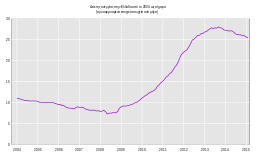
Today, Greece is our example, and the recent disaster in the country certainly demonstrates similar horrors to those listed above; I’ve heard stories of how many have been forced to leave their modernised lives and work the land to survive, whilst the unemployment record in the country reached a record of 28% in November 2013, (to put it into context, the proportion of unemployed Americans during the Great Depression was lower than 25%), and homelessness, once a foreign concept to the Greeks, rocketed. Sadly, the rise in what BBC News describes as the ‘New Homeless’ coincided with the particularly harsh winter of 2011-12, leaving many exposed to the freezing temperatures with little more than a blanket to conceal them from the cold.

Greek Unemployment, 2004 - 2015

Greek Unemployment, 2004 – 2015

There is, of course, the argument which states that such hardship is a result of a recession, as opposed to the capitalistic exploitation of the Greek people, and thus, whilst capitalism ruins many lives in India or China, it is not responsible for this particular disaster. Yet a similar situation undoubtedly exists among what the advocates of Maoism (Third-Worldism) cite as the revolutionary proletariat in these aforementioned countries, for not everybody in this part of the world lives under the shackles of first-worldist exploitation, but the poverty experienced by the majority of the population (including these people) is still reflective of the unequal distribution of wealth caused by the former, and thus, the economic system can be held responsible for their impoverishment. The same can be said for the Greek population, as the crisis which ruined these people is rooted directly in the capitalistic economies of Greece and Europe, so threfore capitalism is still the force which reduced them to poverty.

Additionally, I believe that whilst refuting Maoism (Third-Worldism) is important, the crisis also serves a more general purpose in reminding us of just how vulnerable we, the capitalist world, actually are. It would be easy to assume, from the bubble of ignorance provided by a comfortable western lifestyle, that this kind of thing doesn’t occur in our neck of the woods; that capitalism today cannot bring about such misery, yet it’s important not to let yourself fall into this trap, for such a crisis could happen to you too. If nothing else, treat the event as a news story, one informing the planet that misery and suffering do, and will continue to exist in the first world.

The Evolution of Communist Symbolism

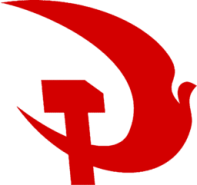
The emblem used by Communist Party of Britain

The emblem used by Communist Party of Britain

The Communist Party USA's logo

The Communist Party USA’s logo

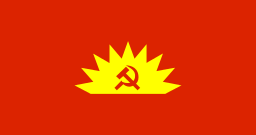
...and finally, the Communist Party of Ireland's flag

…and finally, the Communist Party of Ireland’s flag

Above are three examples of the way in which communist imagery is used today, showing how some traditional symbols – the hammer and sickle, for instance – have been adapted to represent further ideas (as in the Communist Party of Britain’s emblem, in which the dove symbolises peace), or perhaps simply for artistic individuality (as would appear to be the case in the Communist Party USA’s logo).

Yet whist considerably different from similar imagery used sixty, seventy or eighty years ago, the same kind of images are portrayed. The colour red, the hammer and sickle, and, though not actually portrayed in the images above, the communist star, have certainly survived the test of time as the international symbols of radical socialism, which is interesting, since many of the ideas behind such imagery relate more closely to the conditions where they developed than they do to communism itself. The hammer and sickle, for example, developed in revolutionary Russia to represent a union between the Russian peasantry and the industrial proletariat, and whilst the colour red did have an association with revolutionary leftism in Europe prior to 1917, it is also deeply associated with Russian culture (the Russian word for the colour red (красный) is very similar to the word meaning ‘beautiful’ (красивый). As for the five-pointed star, there are different theories about its origins, with some believing that the five points represent the five continents, yet others, that they represent the five groups which would overthrow the Russian tsar, these being the peasantry, the industrial workers, the soldiers, the intelligentsia, and the youths.

Either way, we can definitely see a trend developing here; much of what we associate with communism worldwide is actually more closely associated with an individual country than anything else, relating to specific ideas that would only apply to the USSR. Yet this hasn’t stopped the exportation of these ideas internationally, not only among the socialist nations but through communist parties and movements operating within capitalist countries, from Peru to South Africa. So the question I’ll be answering today is this: how have these icons, often specific and relevant only to the revolutionary movement in the Russian Empire, been adapted to the multiple conditions in which they have been used?

Throughout the Twentieth Century…

I’ll start with the flag of China, the second country to experience a successful, independent revolution. This flag features one large star in the top-left-hand corner, surrounded to the right by four smaller stars against a red background. The stars are yellow and the background is red, both of which are colours used in the Soviet flag, yet if you look carefully, you’ll notice that the red background is a lighter shade on the Chinese flag than on that of the Soviet Union.

According to the website World Atlas, the large star represents communism, whilst the four smaller stars represent the social classes in China. Apparently, the total number of stars (five) ‘reflect the importance placed on the number five in Chinese thought and history’.

In this case, the hammer and sickle doesn’t make an appearance, though it is obvious that communist connotations have been used, with the design creatively blending socialist imagery with features of Chinese society and culture. Such a trend can also be seen in the designs and emblems of both communist movements and countries of that time period…

Here, the flag used by Yugoslavian Partisans during World War II is almost identical to that of the former Yugoslavian Kingdom, with only the single addition of the red star signifying communist ideology. Whilst, like the flag of China, it does seem to combine Marxist and national imagery, it appears to place a heavier emphasis on national, rather than communist identity. Since the red background is also present on the flag of Albania prior to communism, the same can be said for that of the Democratic Government of Albania.
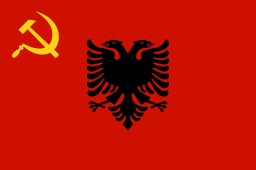
We can see from these examples how the revolutionary movement in the twentieth century has brought about a whole new wave of art, displaying the merging of political and cultural symbols; the combination of national and international imagery, which can perhaps be seen most clearly in the flags of these revolutionary countries. But, if this is largely the case in the 1900s, what about the communist movement after the turn of the century?

After the Fall of Communism…

It’s difficult to find political examples of socialist imagery after the dissolution of the Soviet Union and the fall of communism in Europe, though certain parties and organisations around the world appear to have followed in the same national/communist trend, such as the Communist Party of Belarus (the logo of which is displayed below which superimposes the star, the hammer and sickle, and the open book on the outline of the country) and others (like those displayed at the beginning) have adapted such symbols in their own, individual ways.

Communist_Party_of_Belarus_Logo

Other than these small organisations, however, socialist art hasn’t exactly flourished; no new communist states have arisen, and the now-greatly-diminished communist world hasn’t made any great cultural contributions since 1991, although one interesting change did occur…

After the end of the Cold War, communism gradually became ever less of a threat to the stability of society. As a result, the culture of hatred that developed around the idea began to wear away, and people began to analyse Marxism from a more open, more casual perspective, creating a generation who looked to the left in what is perhaps a more superficial way.

This gave rise to a bizarre blatantly ironic commercial industry, one which I’ve already mentioned in my entry ‘The Commercialisation of Communism’, that exploited a range of communist symbols (often bringing them back from history’s grave) for profit-making purposes.
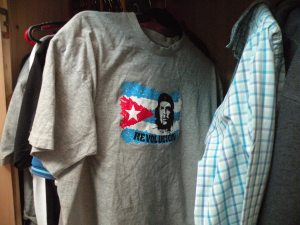
Cuban Revolution T-shirt

Following On…

When it comes to the future of such an art, who knows what will arise (or what won’t)? We live among certain symbols and icons which change all the time, like party logos, and some that have stuck around for thousands of years, like the cross of Christianity, and it’s interesting to imagine which path communism will travel down. Assuming some change occurs, one (by this I mean I) could waste hours of time predicting the symbols and icons that will develop communist connotations. Quite possibly, in a world where capitalism has undergone significant evolution, the hammer – representing the industrial worker – may no longer be applicable, yet what will replace it is down to the future conditions to follow.

On second thoughts, perhaps we’ll stick with the classic imagery of the 1900s, with both movements and countries worldwide reluctant to alter the icons which contain in them such a great deal of history. After all, there’s certainly something unifying about these symbols and the ideas contained within them, and it’s hard to imagine that this will be simply forgotten. In the words of John Thune, ‘I believe our flag is more than just cloth and ink. It is a universally recognized symbol that stands for liberty, and freedom.’ If the communist movement felt the same about their beloved red banner, perhaps we’ll still see these icons around and about hundreds of years into the future.

If change does occur, however, I’m willing to bet that any future development of communist symbolism will stick to the same theme, this being inequality; I think we’ll still see imagery, like the hammer and sickle, that glorifies the exploited class in whatever scenario is then present. This may be in the form of an icon representing their suffering or exploitation, or a tool they are associated with, which represents their labour, be it a robot or laser gun (insert any future gadgets or technologies you find to be appropriate here) but given that communism, by its very nature, emancipates the weak and exploited, I’m certain that it’ll be these people who inspire any future art of the revolution.

256px-Minimalistic_ray_gun_logo

Either way, I’m looking forward to seeing the result.

For any further reading, I’d like to recommend to you the following site: http://maoist.wikia.com/Communist_symbolism

Whilst not a Maoist, I felt that this website gave an insightful description of many of the concepts which I talked about today, and also some which I have not, such as the flag adopted by the Worker’s Party of Korea.

The image of the logo used by the Communist Party USA was provided by Communist Party USA from Wikimedia Commons (though this is not to say they endorse this blog or my use of their work), and was licensed under the following: https://creativecommons.org/licenses/by-sa/2.5/deed.en

The image of the logo used by the Communist Party of Belarus was created by Xanadao from Wikimedia Commons, and was licensed under the following: https://creativecommons.org/licenses/by-sa/4.0/legalcode