Tsipras Takes a Stand…

Recently, as you probably know, the winner of the Greek election turned out to be the socialist party Syriza, or ‘Coalition of the Radical Left’. Even the name is enough to suggest the ideological positions party members are coming from, alongside the fact that their former communist leader, Alexis Tsipras named their child Orpheus Ernesto, a possible tribute to Argentine revolutionary Che Guevara. Their economic stance, however, shall be far more influential in the months to come: an opposition to austerity. When first hearing of them, I thought that their political and economic views clashed somewhat, given the nature of the organisation which they have sparked tensions within, this being the European Union.

I think we can all agree that the EU was founded on broadly leftist principles. Themes of proletarian internationalism can be seen within it, for example. To demonstrate this, the political climate in the United Kingdom,  (whose situation shall likely be similar to that of other countries) is one under which the debate on EU membership has assumed ideological characteristics: the left support it, whilst significant movement on the right oppose it.

But the leader of the British Labour Party, Ed Milliband, according to the Telegraph newspaper, was once forced to deny that he was an ‘old-fashioned socialist’ highlighting the extent to which socialism in mainstream British politics has been watered-down. Tsipras, on the other hand, whilst perhaps not reflecting the characteristics seen in the KKE (Communist Party of Greece), would obviously uphold and practise far more radical views than Milliband, and yet what the Greek Prime Minister intends to bring to the scene of international politics was described by Andrew Smart, in an article published by the Idler Academy, as ‘two fingers to the tyranny of the cult of productivity.’

It’s this description that I’m interested in, as the conclusion I’ve come to is this: The European Union is no longer a leftist organisation. Whatever socialist principles it was founded upon have dried up with the current recession, and perhaps only the most moderate of Europe’s contempory left see anything in the union anymore. Jean-Claude Juncker does not strive for ‘international justice’ and ‘economic liberation for the proletariat’ or even any moderate imitations of true socialism: He wants to put an end to debt, and will happily wait for the countries of both Eastern and Western Europe, no matter how dismal or prosperous their economies, to pay. This will translate to bad news for their citizens. A slogan used by the Communist Party USA; ‘People and Nature before Profits’, in my opinion, outlines a programme which the EU should adopt.
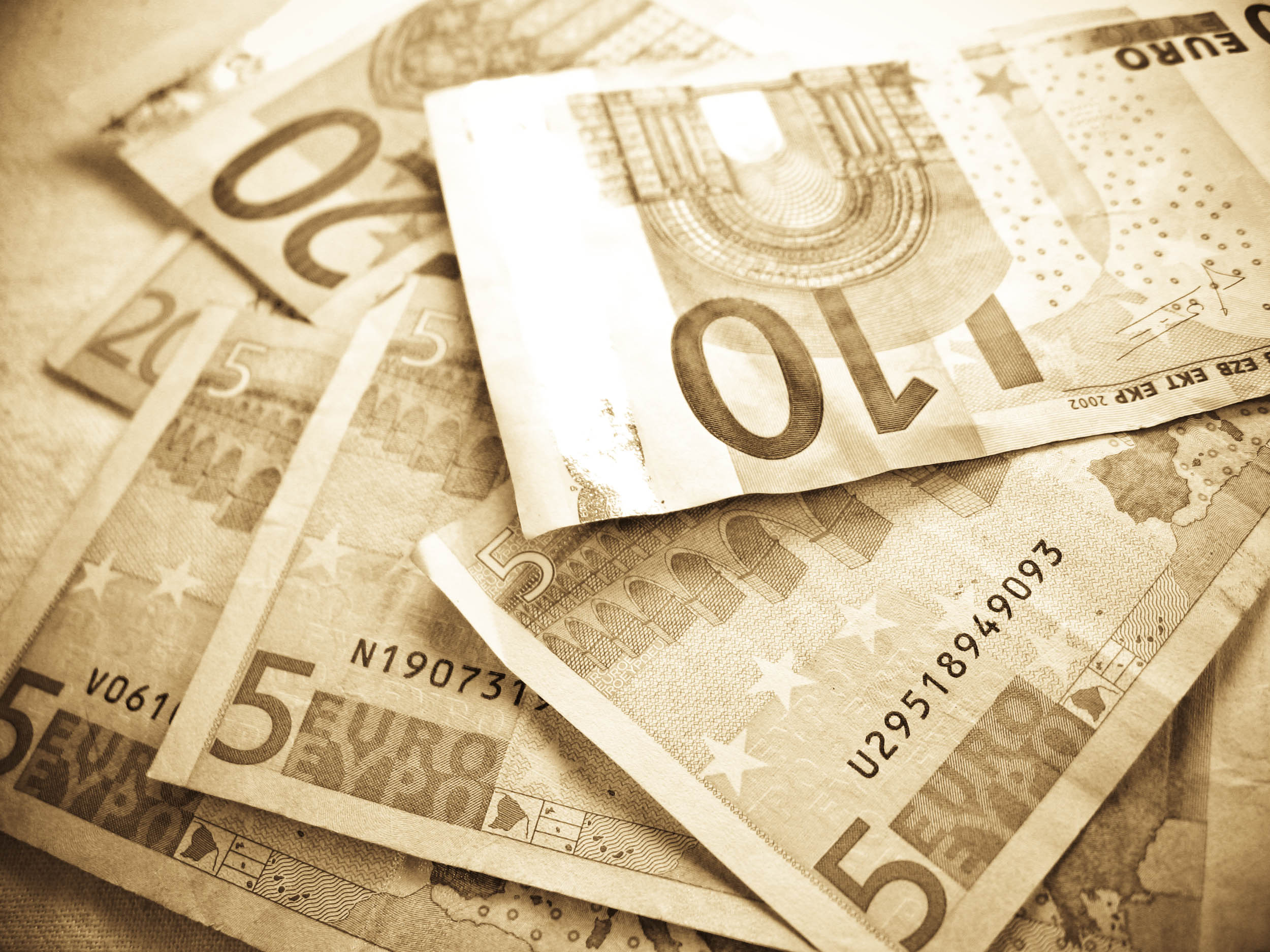
euro banknotes

Tsipras is the first to take a significant stance, and I can only hope he’s not the only one. I’d like to see this as the point at which the parties of Europe are beginning to realise that whilst debt presents significant concern, the demands of the people must come first. In any case, one can determine not only from the conditions causing the election result in Greece, but also the hostile attitudes it caused within the EU, the true nature of the organisation. Based in Brussels, the European Union is currently an aloof bureaucracy centred on the elimination of debt at the cost of wellbeing, when it should learn to value the peoples’ urgent needs more, especially in cases such as Greece today.

Russia, Crimea and Putin’s Intentions 

Have you ever considered the reasons behind the Russian invasion of Ukraine?

What drove Putin’s order for the annexation of Crimea?

Why did rebels in the east of the country attract Putin’s attention?

Why, when less than twenty-five years ago the Kremlin granted Ukraine its independence? Feel free to disagree, but I here’s how I view the situation: The old KGB agent Vladimir Putin is now the president of a once-revolutionarily-heroic, progressive and promising nation at a point when the country could be viewed as directionless. Putin enters the stage after the collapse of the hope communism once provided. Since 1991, though a great deal has probably improved, the country no longer even has a dream to hold onto.

I’ll be honest. When I began this entry, the title I had in mind was ‘Imperialism in the Russian Federation’. I was adamant that this entire issue was a matter of imperialist attitudes within ‘mother Russia’. However my viewpoint changed today, when I read an article titled ‘Ukraine and Crimea: what is Putin thinking?’ on ‘theguardian.com’ about an hour ago, explaining that ‘Some have seen Putin’s actions in the context of a post-imperial complex’, saying that ‘There may be a flicker of truth in this, but the reality is more complex, according to those familiar with the Kremlin’s decision-making over Crimea in recent weeks.’ This got me thinking…

I came to the view that, regardless of the purely ideological perspectives one may view these events from; regardless of whether or not they ought to be labelled as ‘imperialistic’, one thing can’t be denied: Putin needs Crimea for reasons outside the usual motives for occupation. The materialistic necessities for resources, the tactical necessities of territory to provide an advantage in battle, or perhaps the desire for the establishment of freedom or equality that drove the initial invasions of the Russian satellite states constituting the early Soviet Union – what could be seen as ‘usual’ motives for occupation, are not applicable to the situation.

It’s clear that a state of this size and capability does not require Ukrainian influence

What I can make from the events is this: Russia needs something to hold onto in the aftermath of communism. Alongside the desire to remind the west of their capabilities and their superiority, and a victory in Europe may provide a temporary solution to the air of dissatisfaction which has clouded the skies over Moscow since 1991. Obviously, without ever living in the country or having any real knowledge of the ideological perspectives within Russia, I can’t say for definite, but the obvious benefit of the ‘communist dream’s’ collapse seems to be the fall of the autocratic Communist Party. Since then, however, one autocratic regime has been replaced with another, yet I think it’s fair to say that the loss of an ideological dream has not been accounted for.

To provide a broader perspective on the situation, the article I’d previously mentioned mentions the internal events in Ukraine, and the fact that Russia’s influence on Ukraine was ceased by internal revolution, referring to one individual (Gleb Pavlovsky) who said that “Putin hates revolution, he’s a counter-revolutionary by nature.” In response to this, I’d say that obviously he wanted to re-establish his influence and did so by means of using and possibly assisting rebels (this is a matter open to debate), as well as annexing territory. I can’t comment on Putin’s own views on the concept of revolution, but I can say that I don’t believe the Russian influence in Ukraine is truly necessary to Putin, and that the measures he took to secure it are, whilst a response to recent events, driven by internal desperation.

This is the conclusion I’ve come to: In a Russia devoid of the hope socialism provided, but with a still-stormy relationship with the western powers, and the autocracy communism is so often blamed for preserved, Putin’s actions were rooted in his own desire to hold onto what he could. Thus, despite whether or not it was truly necessary in the long-term, his influence in that region was one he was not prepared to give up. I suppose, to see the truth (if we ever will), we’ll have to wait and see how it all plays out.

The Featured Image was provided by Kremlin.ru from Wikimedia Commons. Here is a link to the photograph’s licence: http://creativecommons.org/licenses/by/3.0/deed.en, and one to the photograph: http://commons.wikimedia.org/wiki/File:Ceremony_signing_the_laws_on_admitting_Crimea_and_Sevastopol_to_the_Russian_Federation_1.jpg

Cuba: the World’s Last Attempt at Socialism

When the current thaw in U.S./Cuban relations made the news, it became clear that there were two sides to this debate. While many wanted to lift the embargo against the Cuban people, others undoubtedly wanted to starve the country’s autocratic regime. I opposed these sanctions, but for an entirely different reason: I wanted to preserve what may be the world’s last honest attempt at socialism.

On the opposite side of the globe, the Vietnamese Communist Party maintains firm leadership, yet what has truly become of Vietnam? A country, this is, where Coca-Cola is bought and sold as a consumer product – but it’s not alone. The changes which such a country has seen are comparable to those which have taken place in the People’s Republic of China, as within both China and Vietnam is a system driven and animated by force which seems to lie somewhere between communist pride and nationalism, and perhaps some petty statement of reaching ‘true socialism’ through the market economies they have constructed for themselves in socialism’s name. Given this is the world which the two nations have slipped into, will the current economic reforms concerning America’s embargo against Cuba have the same consequences?

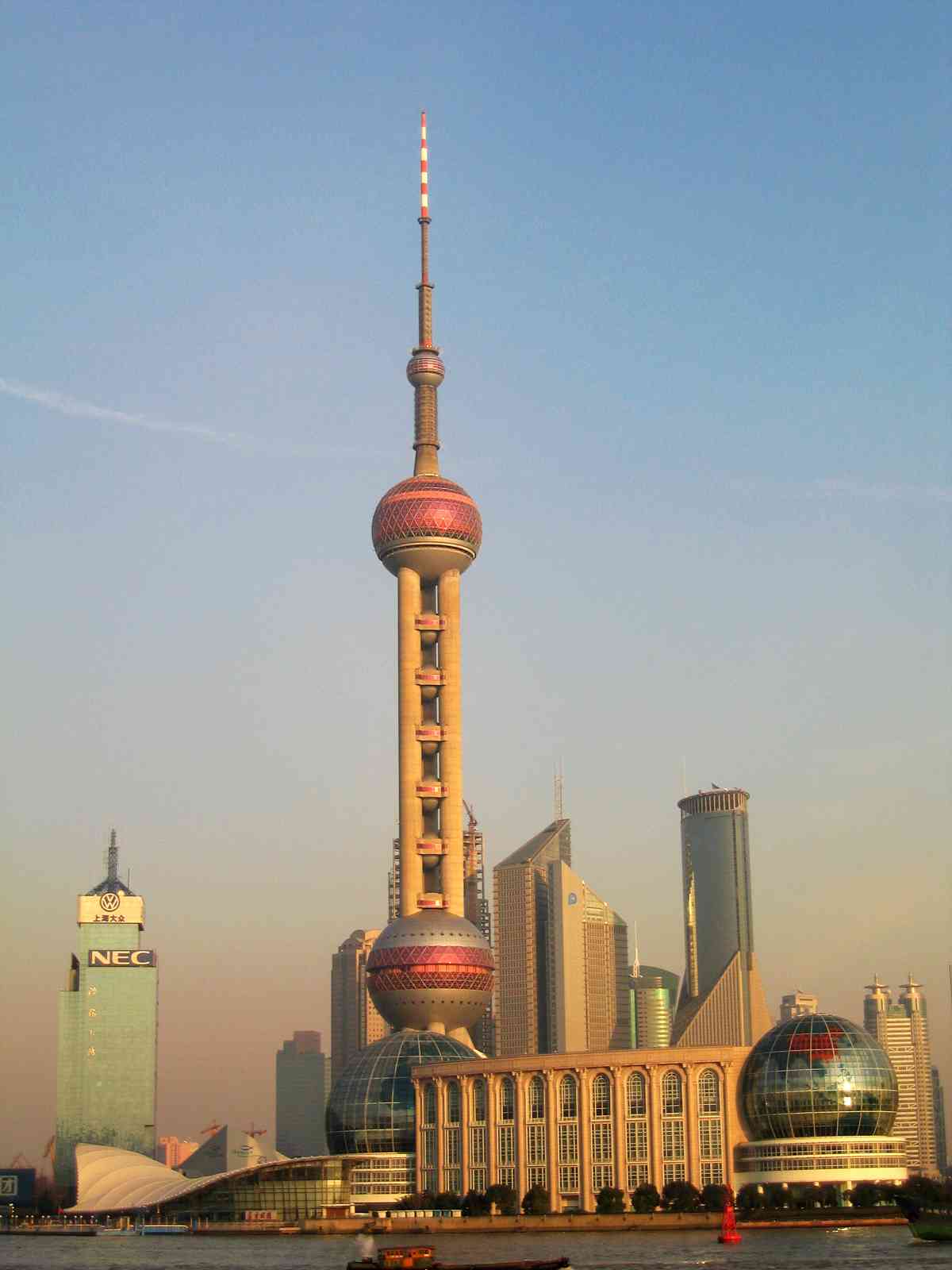
Buildings in Shanghai

All I can say is that, given we’re awfully short of communist states, I hope not.

This will be a sensitive situation for many who lived under the repressive regime at the height of the Cold War, or even today, in a country where citizens have risked their lives to try and reach Florida, ninety miles away. The Black Book of Communism estimates that between 15, 000 and 17, 000 were killed under the regime, and (whatever the actual number) it’s hard to imagine many friends, relatives, or sympathisers of these victims supporting Barrack Obama’s decision to open the door to Cuba; I imagine they’d rather the United States continued to show no mercy and no remorse to the regime of what the Lawton Foundation of Human Rights called an ‘enslaved island’.

I’ll accept that, but despite all this, I still believe that socialism should be given a chance. Not an illusion of socialism, but a full-blooded attempt. If, as a result of welcoming the United States, Cuba substitutes its own attempt with an illusion, as has been the case with both China and Vietnam, which nations will remain to keep the red flag flying? Even if one took Marxist Economic Determinism – the theory of the proletariat inevitably leading the world to communism due to their own exploitation – for granted; even if one maintained the belief that communism is the final and inevitable truth, surely they’d accept that the sooner a nation such as Cuba may arrive at that truth, the sooner the same shall occur on a worldwide scale. If Cuba’s attempt, which may well be the last attempt remaining, is thwarted by these reforms, this cannot happen.

I also want to talk about not just what Cuba is capable of achieving, but what it has already achieved. When discussing communism with somebody opposed to the idea, they did remark that Cuba may be the only place where socialism has actually been partly successful. It is a country with free education, and not only free healthcare, but a healthcare system recognised internationally for its brilliance. According to the news source Al Jazeera, the infant mortality rate in the country is one of the lowest in the world, slightly lower than that of the United States, and life expectancy is over 77 years, (among the world’s highest).

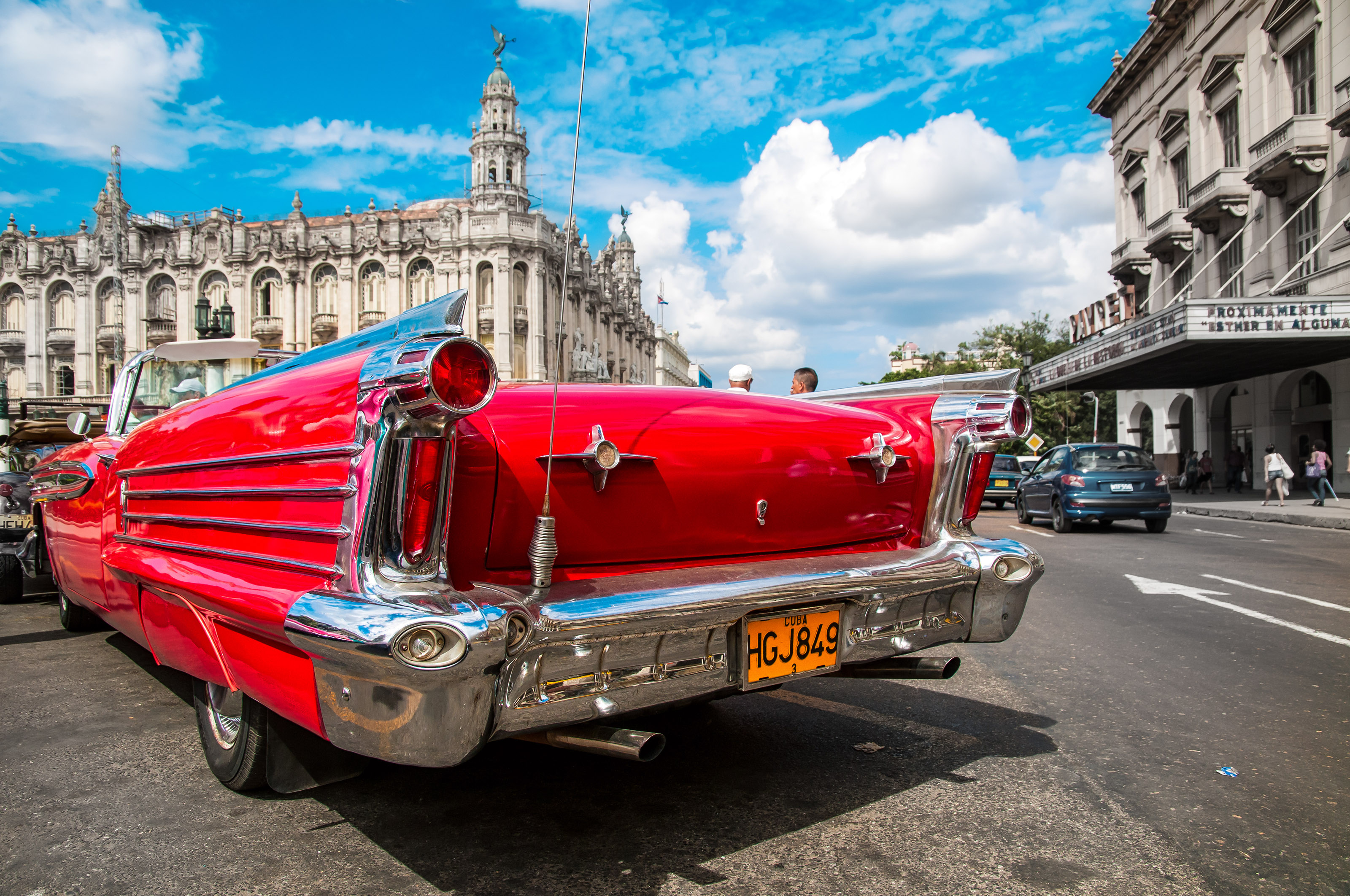
View of Car in Havana

Now Al Jazeera also states that the system which exists in Cuba is on the decline, but if this is what the country have constructed from autocracy, and political repression, imagine what the socialist regime, if truly developed, could construct. Just because it is not at such a point currently does not mean that this shall continue to be the case, and it definitely deserves a chance. Thus, when the end product is the possibility of achieving true socialism, alongside the end of capitalist class-based oppression sooner, the current existence of the autocratic Cuban state can be justified in communism’s name.

Finally, it must not be forgotten that simply because the United States is no longer pretending Cuba doesn’t exist does not mean liberty will prosper. Whether or not you’d be prepared to support autocratic socialism is really irrelevant, because, whilst in one circumstance socialism shall exist and in another it will not, autocracy will remain regardless (at least for the foreseeable future). As Senator Marco Rubio, a Floridian Republican and a child of Cuban immigrants said: “This entire policy shift announced today is based on an illusion, on a lie, the lie and the illusion that more commerce and access to money and goods will translate to political freedom for the Cuban people”.