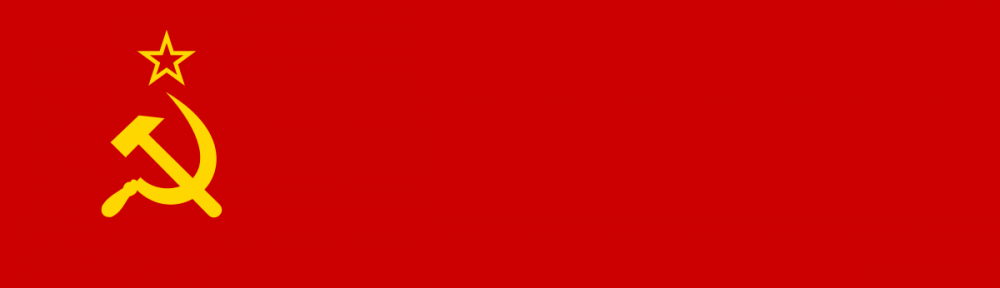
Christmas Under Communism

Today being December 25th, it feels very inappropriate to write about anything non-Christmas related, and the ideas I’ve had leading up to this post all seem somewhat out-of-place at this time of the year. Yet nonetheless, I believe I’ve found a way to link the occasion back to the subject of this blog; today I’m asking if Christmas was celebrated in the communist world.

In the Soviet Union, celebration of the holiday was greatly restricted, and it was suppressed as a manifestation of religion. The League of Militant Atheists, an ideological organisation in the country, fuelled the suppression by promoting an anti-religious and anti-Christmas sentiment , and it is perhaps partly due to their efforts that Christmas is still not widely celebrated in Russia today.

The situation is similar in the People’s Republic of China, as the holiday is still not celebrated by many, yet this is less a result of political action as it is of religion; the Chinese Christian population equates to about one percent of the country’s 1.4 billion inhabitants, meaning that few recognise the festival’s religious significance. This is ever more true in the more remote, western regions, where it is likely seen by many as an alien tradition.

Yet despite this, Christmas has increased in popularity throughout China, and whilst suppressed in the Soviet Union, a separate, secular festival on December 31st was celebrated under the socialist regime. This suggests that, irrespective of whatever religious beliefs they may have, humans want to celebrate something this season. In fact, even the modern holiday we call Christmas wasn’t always very Christian; first a week-long Pagan festival concluding on Dec 25, it was adopted by Christians to ‘draw in’ Pagan believers, proving that you don’t need God as an excuse to celebrate..

With this in mind, I wish everyone a merry, secular Christmas Day.

My decoration-of-choice for the tree


How Language Legitimizes Terrorism

Following the war in Syria and the rise of Daesh, western society is more determined than ever to curb the number of men, women and children turning to these organisations. Tactics already employed will undoubtedly have some effect; internet censorship will certainly prove useful in the goal of trying to prevent online recruitment, for example. Yet nonetheless, I believe there’s one area where we fall short: the language we use when describing such people.

Surely, if we’re trying to lower the number of ‘homegrown terrorists’ we churn out each year, the last thing we’d want to do is make terrorism sound appealing. Yet synonymous with ‘terrorist’ are words like ‘radical’ and ‘extremist’, which seem to put an exciting spin on the act of systematic murder. After all, when would the ‘extreme’ ever sound less appealing? When has the ‘radical’ option never been more attractive, at least superficially? Given that many of the potential recruits we’re talking about are children, this likely presents even more of a problem. If it’s considered a radical move to join a terrorist organisation, this may help influence such a decision, even if only subconsciously.

Another danger presented by this kind of terminology is the fact that, in the context of Islam, words like ‘radicalism’, ‘extremism’ and ‘fundamentalism’ all imply a sense of untainted purity. They legitimise the doctrine practised by Daesh or al-Qaeda as a somehow purer interpretation of Islam than that of most normal, law-abiding Muslims, which could present a further danger to the aforementioned crowd. If you cherished and respected your faith, you could easily conclude that an extreme form of that religion – a purer form of that religion – would be favourable. The problem also lies in the fact that this kind of interpretation is wholly untrue; look at most of these organisations and you’ll see that they’re not really fighting for the caliphate. They’re just angry and bloodthirsty people looking for an excuse to kill others.

Now, I’m not suggesting there’s a black-and-white separation between Muslims and terrorists, and, as someone very critical of all religion, I’ll happily make the point that much of the violence carried out by these so-called fundamentalists is rooted in traditional Islamic principles, yet it seems like they’re currently portrayed as more legitimate followers of the same creed. We need to call a spade a spade and accept that sloppy language of this kind only conceals terrorism’s ugly reality.

What do we Mean by ‘Imperialism’

The world ‘imperialism’ holds a special place in Marxist rhetoric.

Alongside ‘revisionist’, ‘Trotskyist’ and various terms denoting bourgeois status, it is a favourite insult of many (particularly Maoists), and has been such ever since it was first theorised by Lenin as the ‘Highest Stage of Capitalism’. Yet, whilst popular, it seems that its meaning is not always clear. For example, many socialists would criticise the practices of both Julius Caesar and George W. Bush as ‘imperialist’, yet their actions were very different, and it’s as though this difference is often glossed over.

This can be seen in Mao’s Theory of Three Worlds, which groups the USA and the USSR as imperialist countries, Europe, Japan and Canada as ‘smaller’ imperialist nations, and Asia, Africa and Latin America as the victims of imperialism. Yet the way in which the USA exerts dominance over these parts of the world isn’t explained, for, the days of empire now gone, it’s clear that such exploitation is predominantly economic only, and perhaps neo-colonialism would be a more accurate description. This is something that I feel is often ignored; when Lenin wrote about imperialism’s role in the development of capitalism, he spoke of the British, German and Portuguese empires, yet here, Mao refers largely to the corporate exploitation of the developing world.

Something else left unexplained here is the distinction between western imperialism and that of the Soviet Union, which, unlike the west, did not profit through neo-colonialism. Here, the term refers to the Soviet domination over Eastern Europe or Afghanistan through military and diplomatic, as opposed to economic control. Thus, though these two forms of domination differ starkly, they are grouped under the same banner.

To clarify the distinction, I believe these two different varieties of imperialism need stating; economic, and military/political imperialism. Often there is overlap, such as the forceful domination Britain exerted over India for its own economic interests, or perhaps the Second Iraq War, arguably driven by similar interests, yet the differences are clear, despite how often they’re ignored.