A Means to an End (of Exploitation): Marxism and Utilitarianism

Over the past hundred years, I won’t deny that many ruthless and otherwise unjustifiable acts have been carried out in the name of socialism. Sometimes, these actions were directly harmful (such as the use of state terror), whereas in other examples they were not (such as the introduction of strict economic policies that later caused suffering), yet many perished all the same. This is why communists today, require adequate justification for what’s been going on in these countries, and it would seem to me that this comes most naturally in the argument that the end may justify the means, or if you’re Trotsky, ‘the end may justify the means so long as there is something that justifies the end’ (I know it sounds slightly pretentious).

This is a core idea of utilitarianism, an ethical theory predating Marxism, which argues in a very general sense that an action is defined in terms of its consequences. Thus even concepts like genocide, which we’d normally consider horrific, are permissible if they bring about greater happiness than would have otherwise been the case, the principle of the greatest happiness for the greatest number of people lying at the heart of the philosophy. Just from this, one can see key similarities between Marxist and utilitarian thought; they both exist with an eye to the majority; they both strive for the wellbeing of the masses, and in both schools of thought it is upheld that violence, be it in the case of class conflict (Marxism) or the ‘Trolley Problem’ (utilitarianism) may be used to achieve the greater good. So I’m writing to discuss the similarities between these two philosophies, whether or not Marxism can operate in a utilitarian way – or vice versa – and finally, whether or not utilitarianism successfully justifies the many otherwise-atrocious actions committed in communism’s name.

First of all, it’s worth pointing out that Marx’s ideas entail an element of sacrifice. Friedrich Engels once stated that ‘The next world war will result in the disappearance from the face of the earth not only of reactionary classes and dynasties, but also of reactionary peoples.’, and the fact that he followed it up with ‘this too, will be a step forward’ confirms the utilitarian character of such thinking, which treated these horrors as a necessary part of the communist struggle. On top of this, it has to be remembered that Marx’s interpretation of what capitalism would inevitably lead to, whilst a scientific interpretation, also bore the label of justice, equality, and all that was right. Thus, science and morality merged with the Marxian prediction that from capitalism there would arise communism, the latter being a better moral alternative as well as an inevitable on. This was simply because it was upheld the idea of a better world, the best, in fact, of all hitherto economic systems (except possibly Primitive Communism). True, that’s an incredibly vague interpretation, but I think it’s obvious that the specific ideas of classlessness or an end of exploitation are credited as they result in a happier society. This is why the Greatest Happiness Principle, as it’s referred to, is very definitely present in scientific Marxism and underpins the core Marxist ideas and theories.

If we can thus accept that these ideas are utilitarian ones, I think it’s also true that they are justified in a utilitarian way. The kind of violence Marx and Engels spoke of wasn’t without reason; why would anybody advocate ruthlessness when they didn’t feel it was necessary? And when I talk of its necessity, I refer to progression – forward movement in the direction of liberty and equality – in the direction of greater happiness. It could be argued that Marxism is not a science and that communism is not an absolute truth, so therefore there’s nothing to justify what has been done in its name, yet firstly, whether or not Marx was right is separate debate, and secondly, even if Marx was proven wrong; even if we find that there is no inevitability in communism, such a brilliant concept is surely still worth fighting for.

I conclude by saying that Marxism’s utilitarian nature should be realised, as the two theories will likely benefit from what the other has to provide; currently, whilst many do acknowledge why Marx’s ideas should be vindicated, many don’t, and a sturdy, underling justification would do a good job in providing a simple explanation in this regard. I think it’s even possible to argue that, similarly, utilitarianism lends itself to a Marxist interpretation, due to the ideas it values placing the state of the majority in society above all else, which is also an idea worth exploring. The political views of Jeremy Bentham, one of, if not the most important figure in the founding and development of contemporary utilitarianism, reflect this.

Communism, not Corbynism

Last week, something significant happened in the world of politics: Britain’s once moderate and reformist Labour Party elected an anti-monarchist, Trade Union backed socialist as their leader, who aims bring key industries back into state control, leave NATO, and create a socialist United Kingdom (/Republic). Given that this was the party which, only eighteen years previously was advocating a kind of social capitalism, it’s possible that they’ve never had a leader this radical.

Can you imagine the kind of fuss this will cause if he wins the General Election? The western left has become so moderate in recent years, with even capitalistic centrists like Barrack Obama having been accused of ‘socialism’, that it’s as though there’s no longer a place for the Corbynites of this world. The USA (a country not only less-to-the-left, but more-to-the-right as well), is an even better example. If J.C. rose to President in America, there’d probably be a second Civil War!

However, in the midst of all this, it’s important that Marxist left remember something: Corbyn is not as radical as you may be inclined to believe. OK, maybe in a country like the United Kingdom, where former party leader Ed Milliband qualifies as a ‘f***ing communist’ (courtesy Noel Gallagher), his views could be seen as extreme, but this is only in comparison to what we’re used to; not socialism, but watered-down capitalism.

Corbyn lies between the two, and this, I think, presents a problem. He’s no Milliband, but nor he is he Marx. In the words of his deputy, Tom Watson, ‘Jeremy Corbyn is not a Trotskyist’ and ‘Liz Kendall is not a Tory’, and in the same sense that the reluctance of his former opposition is certainly noted and perhaps exaggerated, so are his ideas, perhaps to the point where the radical left could mistake him for ‘one of them’. In reality, I’d say he’s more of an in-the-middle leftist, a political island between social-democracy and communism; a radical moderate. And as a result, I believe he’ll do more harm than good. Here’s why:

There is a certain side to the British left which is largely destructive. The trade-unionist movement is an example, for, unlike those of genuinely radical socialists, their ideas aren’t scientific, they don’t stand on concrete principles, aren’t guided by a clear motive of socialism, and are, in a way, directionless. Devoid of a clear plan, these movements criticise, attack, threaten and whine about the way things are, and they do so marvellously, but what do they contribute? As far as I’m concerned, not a great deal. OK, minor alterations have been made to the economy as a result of their existance, yet, as these movements are still intertwined within the capitalist system, I’d still see their role as a counterproductive.

Corbyn falls in this camp, as do those who elected him, for they attack capitalism yet won’t commit to a communist alternative. It’s a bit like igniting a revolution but refusing to build a solution to the society you destroyed, which begs the question ‘why revolt?’ True, Labour will likely plan to transform the economy in certain ways, such as the re-nationalisation of industry, yet firstly, simply because an institution exists under state control doesn’t necessarily make it any less exploitive, and secondly, any attempts they does make could easily be undone by whoever replaces them.

If that day comes around (if he’s voted in in the first place, which he won’t be), Corbyn, the ‘extremist’, the ‘Trotskyite’, the ‘revolutionary’ etc., will leave office in a country just as capitalistic as it was before, yet with an economy in shambles and a reinforced hatred for socialism.

It doesn’t need saying that, irrespective of whatever views you may have, neither will do us any good.

Terrorism and Communism

‘Terrorism and Communism’: a book by Leon Trotsky, 1920

Since the 9/11 attacks, fourteen years ago to this day, terrorism has become a major international concern.

This isn’t to say that it didn’t play a role prior to the fall of the Twin Towers; in the UK, many feared the Irish Republican Army; in Peru, it was the Shining Path; and of course, various Islamic attacks like the Lockerbie Bombing were carried out before 2001. But after the end of the Cold War, when the capitalist world’s greatest threat had been defeated, you could say that those who waged war with home-built bombs and illegally-bought Kalashnikovs were once again brought into focus. Now that this form of warfare has once again established itself as a serious threat, perhaps one of the greatest threats to society’s wellbeing, I’m looking at where communism fits in with all of this.

In fact, many of today’s terrorist organisations fight for a socialist future. These include the Unified Communist Party of Nepal, the Maoist terrorist organisations in India, and, as is mentioned above, the leftist militants in Peru. The actions attributed to them range from destroying buildings to kidnapping influential people (this was done famously by the Red Brigades’ kidnapping and murder of former Italian Prime Minister Aldo Moro), all with Marxism in mind. But though these people may act in communism’s name, they don’t have a great history of success in that regard. Can you name a time when a country has been overthrown altogether by an act of terrorism, let alone communist terrorism?

By its very nature, terrorist practise involves individuals or organisations committing acts of aggression to advance their goals, and these actions have, throughout the history, always been shocking but often not particularly productive. The destruction of buildings in India, the kidnapping of a politician in Italy, or the burning of ballot boxes in Peru (all of which have been done in the past) may be cruel, murderous, or evil, but it’s not as though they solve a great deal. Often, it seems to me that these actions are no more than pointless violence.

256px-Red_brigades_logo

The logo of the organisation that killed Moro

However, there are obvious exceptions to this: if we consider terrorism in a general sense, it could be argued that the ANC would not have gained the attention of the South African public had it not been for their criminal actions, or that votes for women would not have been granted had the Suffragettes not vandalised streets. It’s thus possible that socialism’s revolutionary aims may be realised if through terrorism of some sort, and thus, whilst so often unsuccessful and relatively useless, I can’t dismiss the concept entirely; these success stories above prevent me from doing so.

This is why I’m left in the middle of the road, a political position I almost never find myself in. I don’t condone terrorism regardless, as it’s is often likely to do no more than cultivate hatred for you and your motive whilst damaging property or lives in the process, but nor do I condemn it – it can be used to produce brilliant outcomes (as we’ve seen in the examples of black liberation and women’s rights). As to whether such actions will work for this motive in particular, communist terrorists are unlucky in the sense that they fight for an unpopular goal. Its unpopularity is unfair, I believe, but does exist all the same, and thus, these actions may only confirm prior suspicions that communism is good for nothing but inducing suffering.

All I can say is that leftists out there must be careful. This manner of war can work, and can be justified, but only if it really does establish change. It may be difficult to tell when this is the case; the misdeeds of the IRA merely shocked the public and shamed the Republican struggle, whereas those of the Suffragettes proved crucial to theirs, but careful consideration of the circumstances is needed. Without it, it’s likely that a few groups and organisations will do nothing but harm our common cause.

The photo depicting the Red Brigades’ logo was provided by Tentontunic from Wikimedia Commons. Here is a link to its licence:

https://creativecommons.org/licenses/by-sa/3.0/deed.en

Workers, not Machines

We live in a world where our increasing reliance on technology is becoming ever more concerning.

Did you know that the University of Cambridge recently established a department on the protection of humanity from the threat of artificial intelligence? This isn’t the only example; novels are written, films are produced, and serious debates and conversations worldwide discuss the subject, asking the same question that has worried mankind for decades: whether or not it’s possible that someday, we will find ourselves at the mercy of machines.

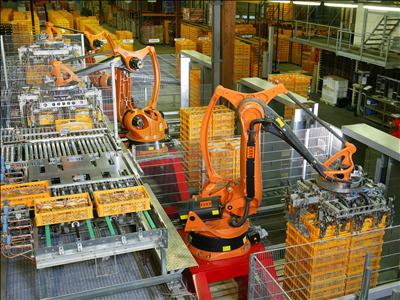
Often, this is considered from a political perspective (‘what if robots took over the world and reduced human beings to mere slaves?’), yet there’s another side to the debate, for whilst having the potential for world domination, modern machinery could also revolutionise society’s economy. Today, I’m asking whether or not the machines we build, quite capable of completing even the most menial tasks as efficiently as any human, take over the role of the industrial workforce.

Factory_Automation_Robotics_Palettizing_Bread

It’s definitely a question worth asking, because it could potentially threaten the careers of billions worldwide. It’s also perfectly possible, unlike the subject of other debates surrounding robotics which concern an indefinite point in the future, when we have finally created artificial intelligence or some other development we can’t actually be sure we’ll achieve. No, this is something that could happen in a matter of years – we have the technology, probably the money, to allow such to occur – all we need is the will. So, given how possible this would be, it would be sensible to assume that the capitalist world can probably look forward to a new age of human development; that someday soon, we’ll have a worker-free economy.

Or is it?

As a Marxist, this question has troubled me, because it suggests that humans are very close to achieving capitalism without exploitation. In the Communist Manifesto, Marx and Engels wrote of a similar idea, which they referred to as ‘Conservative, or Bourgeois Socialism’, explaining how ‘The Socialistic Bourgeois want all the advantages of modern social conditions without the struggles and dangers necessarily resulting therefrom. They desire the existing state of society minus its revolutionary and disintegrating elements. They wish for a bourgeoisie without a proletariat.’

Now, the Communist Manifesto, arguably the document around which communism is centred, dismisses such a utopian proposition, as did I when reading it; it contradicts the key Marxian idea that exploitation of the international proletariat may only end after a proletarian revolution, suggesting that capitalism can be made ‘friendly’. Thus, when I realised that it would seem logical for new developments in technology would allow just that, I considered how I’d approach this idea, not wanting the entire basis for my philosophy to be disproven. I eventually decided why (in my opinion, at least) it won’t happen…

1. This Could Have Happened Years Ago

One thing I realised was that the replacement of an industrial proletariat with machinery or robots isn’t an idea entirely unique to today’s world, for machinery has played a key role in industry since Marx’s day. In fact, one of his most important theories (the theory of Relative Surplus Value) argues that the rate of profit accumulation can only change through re-organisation of the workforce, which may include the introduction of machines or new technologies. In short, I believe that if mechanisation was a goal the capitalists really wanted to go for, they’d surely have done it by now.

It could be argued that, until modern times, this wasn’t possible, as only recently have we developed technology capable of performing the advanced tasks necessary to society today. But whilst machines have caught up with us in this respect, many of the basic tasks that theoretically could be left to machinery back in Marx’s day, weren’t. Even back then, it would be possible then to build machines that would eliminate many of the most basic and menial tasks subject to the proletariat, but this, largely didn’t happen. Similarly, it’s possible to eradicate a great deal more of the tasks subject to today’s workers, but if we follow in the same trend, I don’t see why this will occur today either.

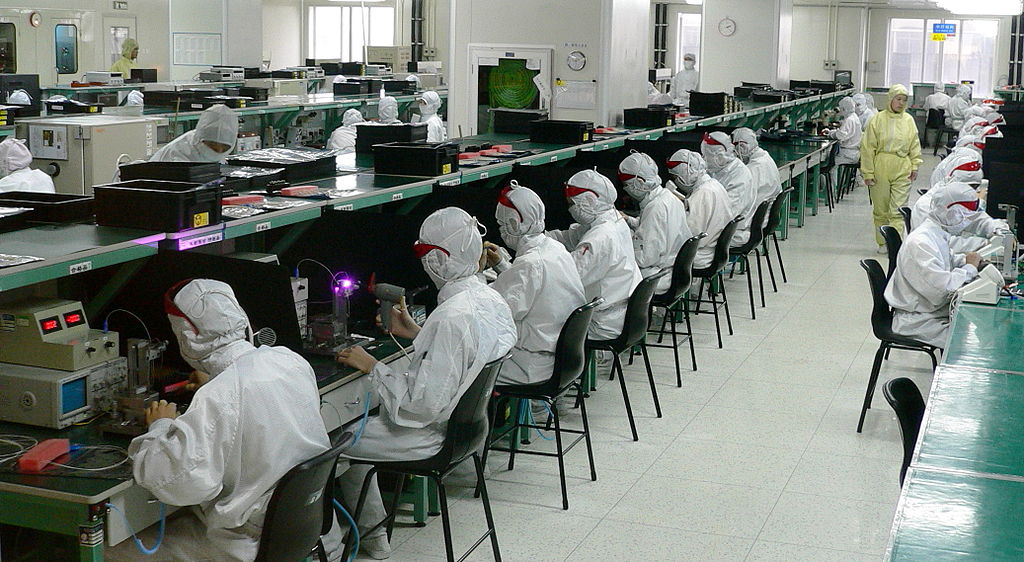
It all comes down to the same principle, this being that, given the current circumstances, it’s just easier to employ workers than invest in technology. To quote Mike Daisey’s ‘The Agony and the Ecstasy of Steve Jobs’, a monologue written about the conditions of those who produce Apple products in Shenzhen, China, ‘why use machines when you can use people?’. Now, there are accusations that some of what Daisey describes has been fabricated for effect, but this doesn’t matter in this instance, as the argument is the same: it’s often easier to exploit the life out of ten, fifteen, or five million than it is to rely on expensive and perhaps-not-always-available technologies that may perform the same task.

The Workers of Shenzhen

The Workers of Shenzhen

2. If it did Happen, it Would Only be Temporary

Let’s imagine for a second that it happened; that the economy was transformed by robotics. I’d like to point out that there is a serious problem with non-human elements taking over the workforce, for we forget that we live in a society of man. This may seem obvious, but it’s important to remember, for, in the world we’ve created, humans require jobs. If, after the ‘technological revolution’, machinery replaces the roles of the modern-day proletariat, that means everyone except the wealthy middle and upper classes is thrown out of work… and they’re going to need employment.

It’s hard to imagine exactly what this would lead to, but if you imagine billions of people who can’t work, and thus don’t have a source of income, it’s not hard to see that some kind of crisis will result. The way I see it, it would likely mean one of two things: either we’d be forced to take a sharp U-turn away from mechanisation in an attempt to re-introduce capitalism as we know it, allowing society to progress more or less in the way Marx predicted, or we’d see something like the biggest and most dramatic revolution in history and capitalism would be destroyed altogether (again giving Marxism significant credibility). Either that or three billion would starve to death.

You may be thinking ‘surely, no-one would let it get that bad!’ and I agree, which brings me to my third and final argument: I don’t believe that we, society, would let this come to be…

3. It Wouldn’t Happen in the First Place

I can’t imagine mankind being so blind to the possibility of all the above occurring. Forget Marxism, forget revolution, and just imagine that three billion or so, a figure which no benefits service, no welfare system, no charity in the world could cater for. Will we just watch these people get thrown out of work, one by one?

When discussing this issue with somebody, they offered a counter-argument by suggesting that such change would be gradual, and would take place only in the form of different brands, companies and factories starting to introduce new technologies to compete with one another. This is likely true, but the results, like the process, would also appear gradually. Therefore, as rising unemployment can’t be seen as good results by any measure, this would only give us time to pause and think. To end our short-lived dream of a bourgeoisie without a proletariat. To stop what we’re doing before that figure gains nine zeros.

The featured image and the second photo in the entry was provided by Steve Jurvetson from Wikimedia Commons, and is licenced under the following (though there is a more recent version of this licence, which can be found via first opening this link):

https://creativecommons.org/licenses/by/2.0/deed