‘Naturally Selfish’: Does Human Nature Make Socialism Impossible?

When discussing socialism, hearing others discuss socialism and looking at the various pro/con arguments on the topic, I’ve come across several ideas as to why communism is a flawed system, why there will never be a revolution and why, at the end of the day, we’re better off how we are. Some cite certain atrocities in various communist countries and make a conclusion about their inevitable presence in such a system, whereas others will simply tell you that it’s an unrealistic goal which will never be achieved in the real world. There are also those who will object on moral grounds, defending their right to private ownership, but perhaps the most interesting proposition I’ve come across is the idea that communism is rendered unachievable by human nature itself. 

I can understand how this argument would appeal to many, as it seems to make logical sense; humans have a longstanding tendency towards selfishness. This can be seen in both a social and a biological manner, with mankind’s survival being based on Darwinian principles, and its prosperity on socially Darwinian ones. It would appear that competition is both an innate and necessary component of human wellbeing, which suggests that building a collective society based on the principles of equality is impossible. I’m going to argue the opposite, or, more importantly, I’m going to approach the issue from a Marxist perspective.

In Marx’s eyes, mankind has progressed through various historical epochs, each based on the dominant economic class in the era, which have managed to control and utilise the means of production for their own gain. So far, we have seen society progress from slavery to feudalism, and later, to capitalism. Regardless of your views regrading Marxism generally, a study of global history tells us that this progression is more-or-less accurate, and it provides a solid basis for historical analysis in this case.   

Each of the epochs described here are based on the principles of inequality and exploitation, but there is, in fact an earlier stage in this model of human development, referred to by Marx as primitive communism. These were the days of man’s tribal history, where hunter-gatherer societies roamed the planet, and when socialism was the accepted norm. The tribes man formed in the ancient world exemplify society devoid of exploitation, or in other words, a communist lifestyle, that totally defies the judgement of many who claim this isn’t possible. 

Several indigenous peoples like these have survived in the present era, such as the Penan people of Borneo, who live under the principles of equality, have no actual  leaders (only spokespeople who wield no power) and are known for practising ‘molong’, (never taking more than is necessary). The Adi people of India and the Maasai tribe of East Africa also provide examples of preserved tribal socialism, and Israeli Kibbutzim, alongside various anarchist communities today, serve as successful attempts to recreate this lifestyle in the modern world. They remind us that our condition in the past is not reflective of that today.
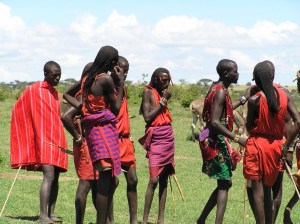
Maasai tribesmen

It’s also telling that this was our earliest state of being, for the fact that our first and most basic attempts at civilisation were not based on greed or self-indulgence (rather the reverse) shows that not only are selflessness and collective organisation possible, but they are natural to mankind. Only after individuals took over the productive means did the focus shift onto individual, rather than communal gain, meaning economic exploitation and unequal distribution are learned habits. This argument is further supported by the fact that humanity is still struggling to find happiness, no matter how much wealth we accumulate. Statistics on contentment or satisfaction in developed countries demonstrate this, showing that endless buying and spending do not make us any happier, and suggesting that it is not an innate desire to strive for ones own gain at the expense of another. Needless to say, this kind of consumption is also incredibly unsustainable, meaning that, like it or not, capitalism must give way to a better economic system.

Coming back to Darwinism, I understand that if societal competition is not natural to mankind, this would seem to contradict the competitive biological nature of mankind’s development, based on the principle of survival of the fittest. However, it may surprise the non-Marxist that Marx was a great admirer of Darwin’s, and saw his ideas on the evolution of organisms, through the process of natural selection, to be at one with his own ideas of society’s evolution, through the process of class struggle. It also isn’t necessarily counter-evolutionary that humanity’s natural state is a collective one; it has merely evolved from this condition in the same way that cells and organisms repeatedly do, and nor does the belief that man will ‘return’ to socialism contradict the ideas of competitive evolution, for, with the rise of communism, we are simply seeing the end of an evolutionary process. In a way, we’re seeing something similar in the natural world today; survival of the fittest has determined humanity’s evolution since it’s birth, yet with advances in the medical sciences, we’re now able to preserve ‘unfit’ characteristics and curb natural selection. Should this continue in the future, humanity may never need to adapt, and evolution would no longer occur.

This is why I believe that human nature does not contradict equality, but rather allows for it. True, we have a tendency to put our own needs above others, but at the end of the day, our earliest efforts at working together show that these unhealthy behaviours aren’t innate or fixed, even if they fuel the exploitive economic systems of modern society. In a debate on the benefit and rationality of religion, I once heard it remarked that, unlike squids, which apparently spend almost their entire lives in isolation, humans are social creatures. However unsociable capitalist society may make us seem, I believe this is certainly something to remember.

For more information on the socialistic structures of tribal society, I recommend the following, an online chapter from David Maurer’s book: http://moderntransformation.com/contents/ch-1-early-stage-tribal-society

The image depicting the Maasai tribe was provided by User:Helga76 from Wikimedia Commons (though I added the caption), and was licenced under the following: https://creativecommons.org/licenses/by-sa/3.0/deed.en


Five Candidates for Future Revolution

Capitalism today is not capitalism as Marx described it, over a century ago, and our economic system is the product of much evolutionary change relating to the political and financial situation in the nineteenth, twentieth and twenty-first century. Now in a new age of economic exploitation (I wrote a lot more about this in my previous entry), the antagonisms between the bourgeois and proletariat have changed character once more, and thus, revolutionary potential can be seen in several areas of the world that could have been glossed over by the Marxist intellectuals/communist movement several years ago. 

Here’s a list I made of five countries (in no particular order) which, I believe will make the best candidates for future proletarian revolution. It’s judged on two things: which would be the most likely, and which would be the most strategically beneficial, in the name of advancing communism and spreading the revolution worldwide. There’s also an element of wishful thinking, hence why I included the UK, where I live, when other countries would probably have equal claim to that position (although in fairness, I was trying to keep it at five!) Feel free to comment and add to the list, and remember, this isn’t a complete assessment; it’s only representative of how I view the world today. 

1. United Kingdom

A dwindling, yet still hugely prominent power in the western world, Britain contributes greatly to the network of international capitalism. From the industries of Wales, Scotland and the larger British cities to the overseas resources harvested by British companies, the signs of exploitation are clear. It’s also telling that many are surprised at the rigidity and profoundness of the UK’s class system, which still reflects that of an old capitalist power, despite the complicating effects of capitalism’s internationalisation. For example, it may surprise you that in 1996, a UN report revealed Britain to be the most unequal country in the western world, and a recent report (http://www.independent.co.uk/news/uk/politics/report-finds-that-britains-wages-are-the-most-unequal-in-europe-10259077.html) shows that the country’s wages are the most unequal in the EU. 

There are those who argue that revolution isn’t possible in first world countries like the United Kingdom, but this isn’t true. What is certainly apparent is the fact that the country’s working class has shrunk and living/working standards have improved as the country grew more reliant on foreign exploitation, yet firstly, contemporary studies of our class system still reveal a large percentage of exploited individuals with a potentially rebellious character (evidence: the London and Birmingham riots of 2011) and secondly, the hoards of foreign workers who constitute a large percentage of Britain’s workforce should not be excluded from the revolution. If a communist movement was to take power, it should act on behalf of these people, and embrace their revolutionary potential. 

If this was to  occur, it would serve as a nail in the heart of the capitalist web.

2. Greece

The birthplace of Plato, Aristotle and Ptolemy has started to demonstrate significant potential for change after the financial crisis of 2007-8. One of the hardest-hit countries in Europe, Greece has already demonstrated signs of future revolutionary activity by the national radicalisation of their politics. Recently, a former communist was voted into power, showing not only the shift in views to extremes (something common in revolutionary situations), but a significant shift to the left. A neo-Nazi party with a fantastically sinister name (Golden Dawn) also did worryingly well in the recent election of early 2015, which also allows us to appreciate how desperate their situation is. 

If real change was to happen as a result of such desperation, we may see something of a re-ignition in the Balkans. Greece, unlike Bulgaria, Hungary or Yugoslavia has never experienced communism, yet if fresh revolution was to establish a socialist Greek republic, it would be easily possible for such to spread and advance beyond the borders with Albania and Bulgaria, spurring revolutions across the whole of crisis-ridden Europe.

3. China (#2)

The revolutionary Maoist state is now one of the most exploitative and ruthlessly capitalistic nations on the planet. What began with reform and relaxation of communist policy resulted in the counter-revolutionary re-introduction of industrial exploitation, to the extent that the western powers now thrive on Chinese production, because they can get away with worse than they could at home. It’s time for the Chinese proletariat to realise they live under a pretence of a socialism, the reality being anything but. It’s time for a second 1949. 

Not only would this be a highly valuable victory on the road to world revolution, given the huge potential China offers in the way of building and advancing communism, but it would help change the worldwide perception of the former. Today, many people with little knowledge of Marxism may happily take the view that China is a communist country. After all, it’s ruled by the Chinese Communist Party, it bears a red flag, and it’s officially known as the People’s Republic of China. But a second Chinese revolution will help to change this, and will hopefully allow people to appreciate the difference between genuine equality and masked exploitation.

4. India

India has, for centuries, been victimised by capitalism. Ever since the United Kingdom colonised the country, it was subject to imperialist exploitation in the interests of its colonists. Since the departure of the British, India found itself victimised by a new form of imperialism, with workers in sweatshops sewing clothes for western companies, their consumers in France, Britain and the United States happy to turn a blind eye. Now, the country is quickly rising as an advanced, capitalist power, yet the majority of its citizens live under the yolk of capitalism, impoverished by inequality. 
Revolution in India would change the lives of over a billion people, and would transform the political landscape of South Asia, given the immense size and influence of the country. An advanced nuclear power with a space agency, one of the largest armies on the planet and a culture famous throughout the world, this country’s importance is obvious. In addition to this, a strong communist movement already exists in the country. I part with them ideologically as they are largely influenced by Maoism, but their presence nonetheless shows something remarkable: a people fighting back.

5. Russia (#2)

Russia existed for 74 years under communist rule, a world record in that regard. The collapse of the Soviet Union in 1991, however, saw the national economy diverge, giving rise to both wealth and poverty in extremes. The oligarchy that now owns much of Siberia’s oil exists at the expense of many deprived citizens. According to Tim Marcin’s article on the ibtimes, the number of Russians living in poverty has topped twenty-two million (http://www.ibtimes.com/russia-poverty-critical-amid-western-sanctions-oil-price-dropping-2008577). 

After the fall of communism, Putin has tried to fill the void by cultivating nationalism, but I don’t believe this solution will last in a country like this,  with an economy driven by business elites, likely with government connections. A return of Bolshevism will also hopefully end the attitude of strict conservatism fuelled by the Eastern Orthodox Church, and I don’t know, but it seems right that when it comes to building socialism, 70 years of experience should make a difference. Lenin, the original founder of communist Russia, once said that ‘It is impossible to predict the time and progress of revolution’, yet nonetheless, I believe we can count this country a likely candidate for the next one. 


Capitalism’s Evolutionary Phases

I’ll start by saying that this entry may be quite dense. The purpose of writing it is to explain and convey an understanding I’ve developed of how capitalism has adapted to survive over the years, a question I’ve been considering for a while now. I suppose you could call the ideas proposed here a theory, (if I was to name it, I’d call it the Theory of Three Ages), and that’s all it’ll be for the moment; any advancement of this idea will only follow a lot of research on my part. 

But, given that this is me explaining my ideas so far, I’ll hopefully give you a good description of these three ages, and of how I believe exploitation has evolved over time. To do this, however, everyone needs to know what we’re dealing with, so I’ll start by asking you the following question:

What is capitalism?

It’s often seen as the embodiment of free trade and economic liberties as opposed to state control. Because of the challenge communism presented in the twentieth century, it would also be easy to cite capitalism as simply one of two political and economic currents in the world, and, after various failures in the communist countries, it’s far too often associated with freedom and harmony. Predictably, I’m going to tell you that this is wrong: it’s the single most sly, destructive, exploitive concept that has dominated the world throughout modern history. 

So here’s a Marxist appraisal of our great nemesis.

The European Age 


In terms of where it all began, capitalism arose roughly three centuries ago, taking its first breath in Italy. I wrote a more detailed entry on its origins a few months ago, but I’ll cover the basics here. The system that takes precedence over all inhabitable continents is a relatively recent one; it developed in Europe, perhaps the most socially advanced corner of the Earth at that point, out of the decaying feudal system that formerly retained supremacy. Yet unlike feudalism, capitalism existed to provide industrial (as opposed to agricultural) production, and with its rise, the focus of the economy was no longer upon the farms, but the factories.

The European countries soon grew in power and influence, and rose to colonise great swathes of Africa, America, Asia and Oceania, allowing them to exploit imperialistically. Imperialism has crept its way into history throughout mankind’s many different epochs, and it has always been a tendency of the strongest individuals to dominate the weak, yet this can be viewed as the rise of capitalist imperialism. The new European empires sought to utilise the people and the resources of the colonised nations for capitalistic purposes, and thus expanded their field of economic influence to the far corners of the Earth.

These powers were thus able to sustain dominance, by widening their field of exploitation beyond national limits, yet it couldn’t continue forever. You could perhaps think of this period as the climax of capitalism, at which point exploitation had advanced humanity greatly, yet had reached a critical level and was growing ever harder to maintain. Even after the establishment of a vast imperial network, the ruling elites of Britain, France or Germany were struggling to control those whose labour they relied upon. The system was, quite literally, falling apart under the weight of its own contradictions.

The American Age

Three significant changes took place in the world throughout the twentieth century. Firstly, the rise in power and influence of another giant, the United States, changed the international dynamic of the capitalist world. Secondly, economic changes allowed exploitation to take place to a less severe extent in the western countries, allowing many concessions to be made to the working population, and causing the working class to actually decline. Finally, the rise of Bolshevism threatened to end capitalism altogether. 

These changes may not seem as though they’d benefit capitalism, but, with the economic system on the very verge of collapse, they perhaps managed to save it. 

One reason why this happened was  the fact that the western countries found a common enemy in Soviet Russia and, later, China, Eastern Europe, Cuba and communist Indochina; they were forced to unite against them. This can be seen most clearly in the Cold War, yet was also present prior to 1945. It demonstrates the development of a capitalist ideology, through the willingness of these nations to fight for motives like democracy and human rights (it is, in a Marxist sense, the tendency of capitalism to allow for greater political freedom) under the new guidance of the United States. It was then a question of whether or not the western proletariat would side with the communist world, or the world run by their employers, and this sense of ideological unity helped allow for the latter. Tales of failures, inefficiencies and abuses in the socialist countries helped strengthen this ideology, and helped keep the workers from revolting, temporarily keeping them occupied and holding capitalism in place for longer.

Yet whilst ideological control helped distract many, the economic contradictions in the capitalist system were still such that it could not continue, and immediate reorganisation of the economy was needed if it were to do so. Economic variation took place in the form of de-industrialisation, causing the working class to shrink in size, and the outsourcing of industry to other parts of the world. This gave rise to a new form of international domination, where brands and corporations, as opposed to armies and governments, became responsible for the unofficial and shadowy exploitation of the third world. Imperialism in the traditional sense, the official establishment of foreign authority in the region, was on the decline, again very much in tune with the tendency of capitalist society to progress in the direction of liberty and freedom, yet a new form of imperialism was developing. It was purely economic, and dodged the need for a military invasion and the controversy that such invasion causes, and yet it was more effective, and could allow the western proletariat to both decline and grow in affluence. They would thus lose their revolutionary character, and so capitalism was kept alive in the developed world. 

Thus an interesting dynamic fell into place, where the capitalist world, led by the United States, relied upon the undeveloped regions for economic purposes, and the communist world, led by the Soviet Union, wished to bring an end to such western domination. This gave way to third-world Marxism, a tendency in communist thought influenced largely by Mao’s teachings, which retains popularity today. It may also be no coincidence that, outside the communist bloc, all the new revolutions occurred in undeveloped areas of the planet. 

The International Age

Throughout the 1980s and ’90s, the communist empire fragmented and the majority of socialist states gave way to a shifting political climate, allowing capitalism to expand across Eurasia, consuming Russia, Eastern Europe, and Central Asia. This led to further changes in the international dynamic, and paved the way for a future in which America may not be the leading capitalist power. As some of the still-officially-communist countries resorted to capitalism, the rise of China presented a further challenge to the United States.

At the same time, the third world, which the capitalist world had become increasingly reliant upon, was developing at an astonishing rate. India, Brazil and Indonesia, whilst locked in the depths of poverty, all have the potential to become superpowers, which suggests that soon our imperial ventures in these parts of the world may no longer be tolerated. If this is to be the case, and even if not (as no format of capitalism can continue indefinitely) the capitalist world shall do what it has done for decades, and scour the Earth for pockets of resources and workers to exploit. New pockets of exploitation have already opened up, in countries like Russia, the perfect example of economic polarisation, and more will likely appear as further geopolitical changes take place.

This, it seems, is the kind of capitalism we’ve adopted. In the European Age, exploitation took place within the confines of individual countries, with certain countries exercising capitalistic rule over others. In the American Age, the division between the exploited and the exploiters began to take on national characteristics, yet now, in the age of international economics, such divisions exceed these boundaries and exist irrespective of states and countries.

Revolution, whenever and wherever it occurs, must take place on an international level to compete with this system. While famously sparse on the practicalities of revolution, Karl Marx did remark that, whilst the differences between nations and nationalities are vanishing in capitalistic society, ‘the supremacy of the proletariat will cause them to vanish still faster’. 

Today, as capitalism grows increasingly globalised, this couldn’t be more relevant. 


The image depicting the Statue of Liberty was provided by Giorgio Martini from Wikimedia Commons, and was licenced under the following (though a newer licence is available): https://creativecommons.org/licenses/by-sa/2.5/deed.en

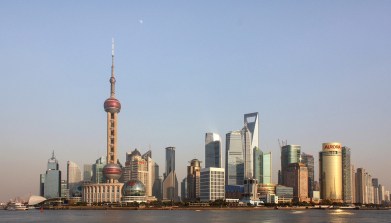
The image depicting the Shanghai skyline was provided by J. Patrick Fischer from Wikimedia Commons, and was licenced under the following: https://creativecommons.org/licenses/by-sa/3.0/deed.en


Marxism, Opium and Morphine

It’s been an intense week.

Last Wednesday I was told of a tumour in my spine after experiencing some pain and immobility in my neck and right arm. I was operated on the following day (coincidentally the 66th anniversary of the 1949 Chinese Revolution) and have since been bed-bound and unable to do a great deal, this being the reason why I didn’t post last Friday. The bonus is the fact that the food in Leeds General Infirmary is actually quite good, and the downside is, well… cancer, but it can’t be helped; it’s the problem with having naturaly revolutionary cells.

Between now and last Wednesday I’ve worried about various things, but one thought that stands out is religion. Before I go into more depth, I’ll stress that I’m an atheist. Religion, the way I see it, is a reactionary and backward tendency that has stood alongside man throughout history, yet has always blinded communities and corrupted rational thought. As society has advanced, so has our depth of knowledge and understanding of the world and, as a result, religious influence has decreased in many ways, but that’s not to say it isn’t an issue. The Israeli-Palestinian conflict, the persisting cultural backwardness in the southern USA, and the political situation in Iraq, Saudi Arabia or Iran are all different manifestations of the same illness. Religion does to society what cancer is doing to my spine.

And then, of course, there is another side to this kind of faith, this being comfort, the reason it exists in the first place. I think it’s obvious that if it wasn’t for how deeply these spiritual teachings have already impacted upon our histories and cultures, we (in a much wiser era) would be far less easily convinced by the arguments they have to offer today, and the most important reason why mankind still clings to these outdated ideas is the sense of safety and security they continue to provide. Religion is an effective distraction and an inviting alternative to the harsh realities of day-to-day life, and this is why we swallow it today just like we’ve done for centuries. It is, in the language of Marx, opium for the masses, just like the oral morphine I’ve been taking to deal with post-operative pain (although unlike Islam, Christianity or Judaism, I’m still baffled as to why people develop addictions to this substance – I can’t say I’ve noticed it make more difference than paracetamol!)

Yet this is where God comes in to my story, because, just as I’ve swallowed the morphine, I’ve also been praying: my prayers tending to follow the lines of ‘Dear God, if you exist, I’d be so grateful if you would show mercy’. This isn’t to say I’m any more convinced of God’s existence than I was last month; I just took the view that it was worth it, in case I’m wrong. I know religious people who have prayed for me, too, and I welcome their thoughts and prayers as well, despite feeling slightly hypocritical given my own vehement atheism. If God does exist, I’d rather be spared than damned, and I see no wrong in telling him, even though rationality tells me there’s nobody on the other side of the void. And, after all, while mainstream Marxism rejects religious influence in societal matters, it doesn’t necessarily reject private beliefs. In the end, I suppose I’m only harming my pride.

As it happens, I have little reason to believe there’s a lot going on in heaven for me. On Wednesday I was told my that my cancer, on a I – IV grading system, fell into the most aggressive, Grade IV category. No one could commit to giving me a death date, but I’m left with the impressesion that, after chemotherapy, radiotherapy and physiotherapy (to regain movement), all of which should begin next week, I’ll have months to live. This was obviously terrible news, though it perhaps takes some of the pressure off as it makes me more assured in my godlessness, and I also can’t help but feel slightly proud that it’s my spinal cells which have done this. In revolutionary terms, they definitely quality as extremists. They’d dwarf the various coups in Argentina, which overthrew and replaced different governments in the region, or the revolutionary movements in the little communist countries like Vietnam or Afghanistan. My cells certainly take after the Bolsheviks here; if the February Revolution was my initial diagnosis, the October Revolution was my conversation two days ago. The shooting of the Romanov family is yet to come, but we sure these cells will take no prisoners there either. It’s also interesting to see that, due to their rapid growth and malignancy, they follow in the internationalist line, bent on spreading the revolution worldwide. Ideologically speaking, I can’t really complain.

But meanwhile, I’ll probably keep trying these things. It seems the logical option to utilise the means you have, in the hope that something may change. I certainly don’t feel any sensible reason why anything will, but our complete lack of evidence on the subject makes it just as possible as it does ridiculous, so it would be irrational to rule out ideas of God, heaven or the metaphysical world entirely. And, whilst still a card-carrying member of the physical one, I’ll hopefully keep reading, studying, and blogging.

I suppose we’ll just have to see how it goes from there…